


I've always been a landscape photographer. So what happens when you swap mountains for puffin colonies? I took my Fujifilm X-T50 to the Isle of Lunga to find out, and here's everything I learned
Photography gear used:
- Fujifilm X-T50 Mirrorless Camera
- Fujifilm FUJINON XF16-55mm F2.8 R LM WR II
- Fujifilm Classic Negative Film Simulation
Introduction
For as long as I can remember, I've been a landscape, travel, and outdoor photographer. But recently I thought it was time to try something genuinely different.
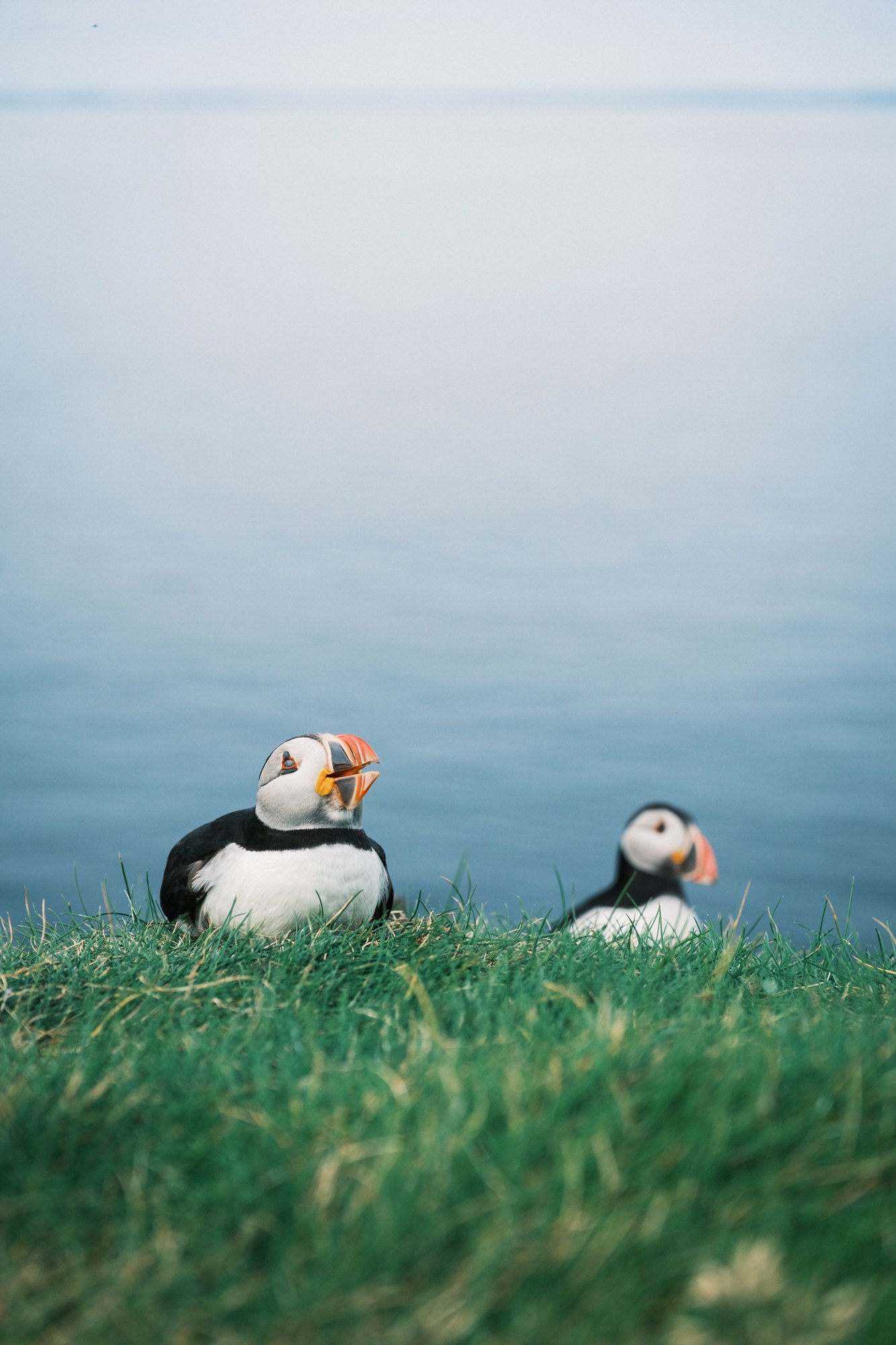
As a photographer, I’m a firm believer that we should always be pushing ourselves to take better images in every way we can. One thing I had never done was wildlife photography, and I thought this would be the perfect way to try something new. However, rather than throwing myself in at the deep end, I decided to start with a subject that felt like a natural development: that being North Atlantic puffins on the Isle of Lunga, off Scotland's West Coast. An incredible, uninhabited place where the wildlife and the landscape meet, and that felt like the right way in.
The short version: it was a brilliant experience, and I'd strongly encourage anyone thinking about trying a new subject to go for it. Below is my story, what I learned, what I'd do differently, and a gallery of images from the trip, along with some tips that you can apply to your photography, too, if you’re also looking to try bird photography. Whatever genre you’re looking at, I hope it inspires you to take your own leap into trying something new. And if by the end you're thinking about picking up your camera and trying something completely outside your comfort zone, then I've done my job.
Getting to Staffa and Lunga: What the Journey Involves
When I say getting to the Isle of Lunga was an expedition in itself, I'm not exaggerating.
From Glasgow: a four-hour drive to the Ardnamurchan Peninsula, a ferry to Tobermory on the Isle of Mull, an overnight camp, then an early start to join a wildlife cruise with Staffa Tours departing Tobermory Harbour, via the Isle of Staffa and on to Lunga. The return went by road to Craignure, then a ferry to Oban, and then the drive home.
Hours of driving. A ferry. A night under canvas. A wildlife cruise. And pretty much the same in reverse.
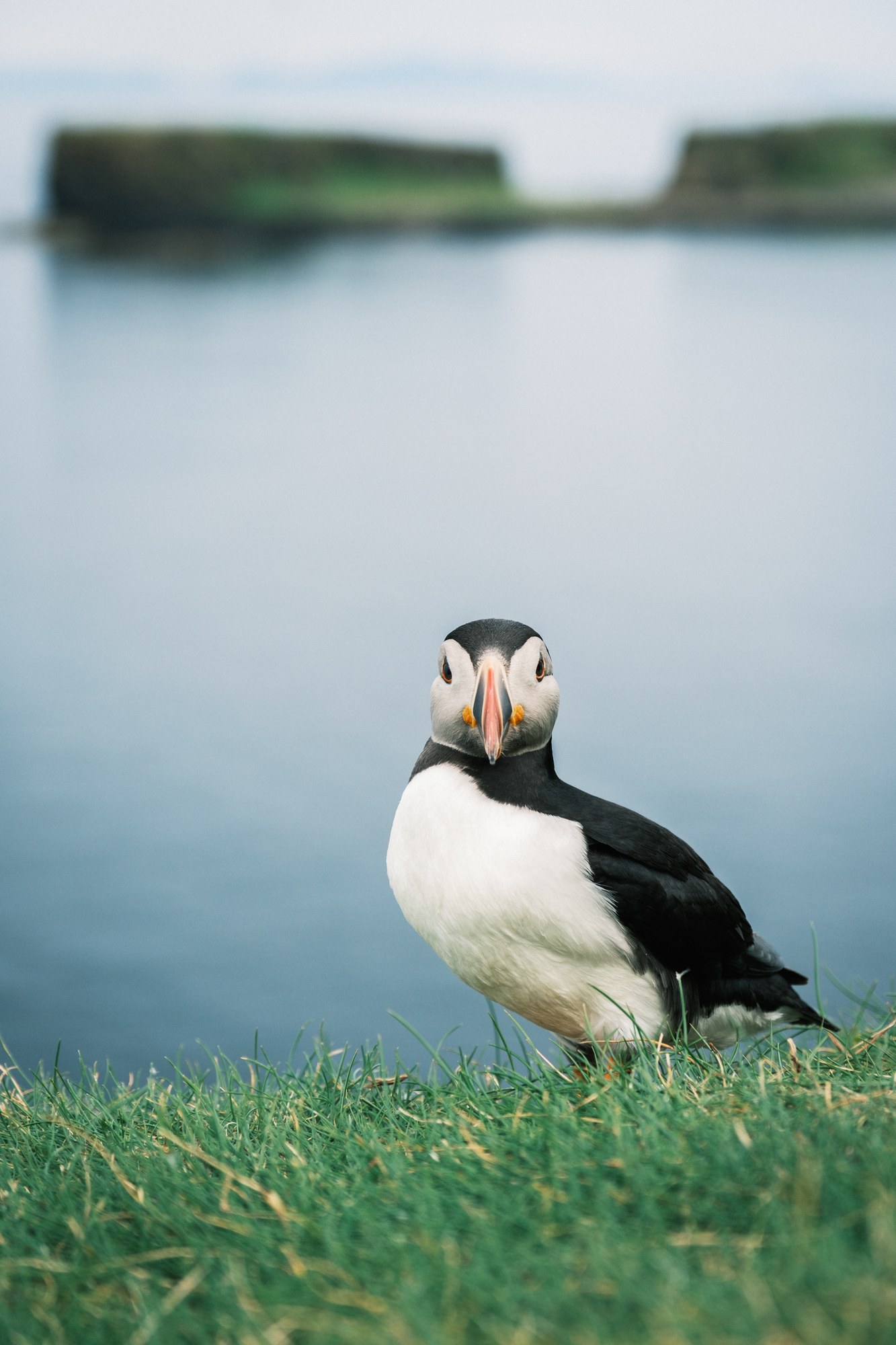
I'm not telling you this to put you off. I’m telling you this as some of the best photography opportunities don't come from outside your front door, and when you're trying a new genre for the first time, that effort makes the reward feel bigger. Standing on Lunga watching puffins nest a few feet away, having done all of that to get there, made every picture I took feel so worthwhile.
Puffins are present on Lunga from mid-April through to early August, with May and June generally considered peak season for both numbers and weather. If you're planning a trip, I'd recommend booking your Staffa Tours cruise well in advance, as spaces fill up quickly during those peak months. It’s also worth noting that, generally, you’ll get roughly two hours (or just over) on the island to limit the impact on the wildlife there. But it still gives you plenty of time to get some great images.
Bird Photography Tip 1: Leave Your Ego at the Door
I'm like to think I’m confident with landscape and travel photography. But when trying a new photographic subject, it means checking that confidence at the door and approaching it with a beginner's eye.
That doesn't mean starting from scratch. Fundamentals like composition, light reading, and ISO carry across. However, doing wildlife photography for the first time opened me up to considerations I hadn't needed before: narrower focal lengths, incredibly fast shutter speeds, and how to frame moving subjects. Remember, you're not shooting the way you normally would, and the sooner you accept that, the sooner you start creating pictures that work.
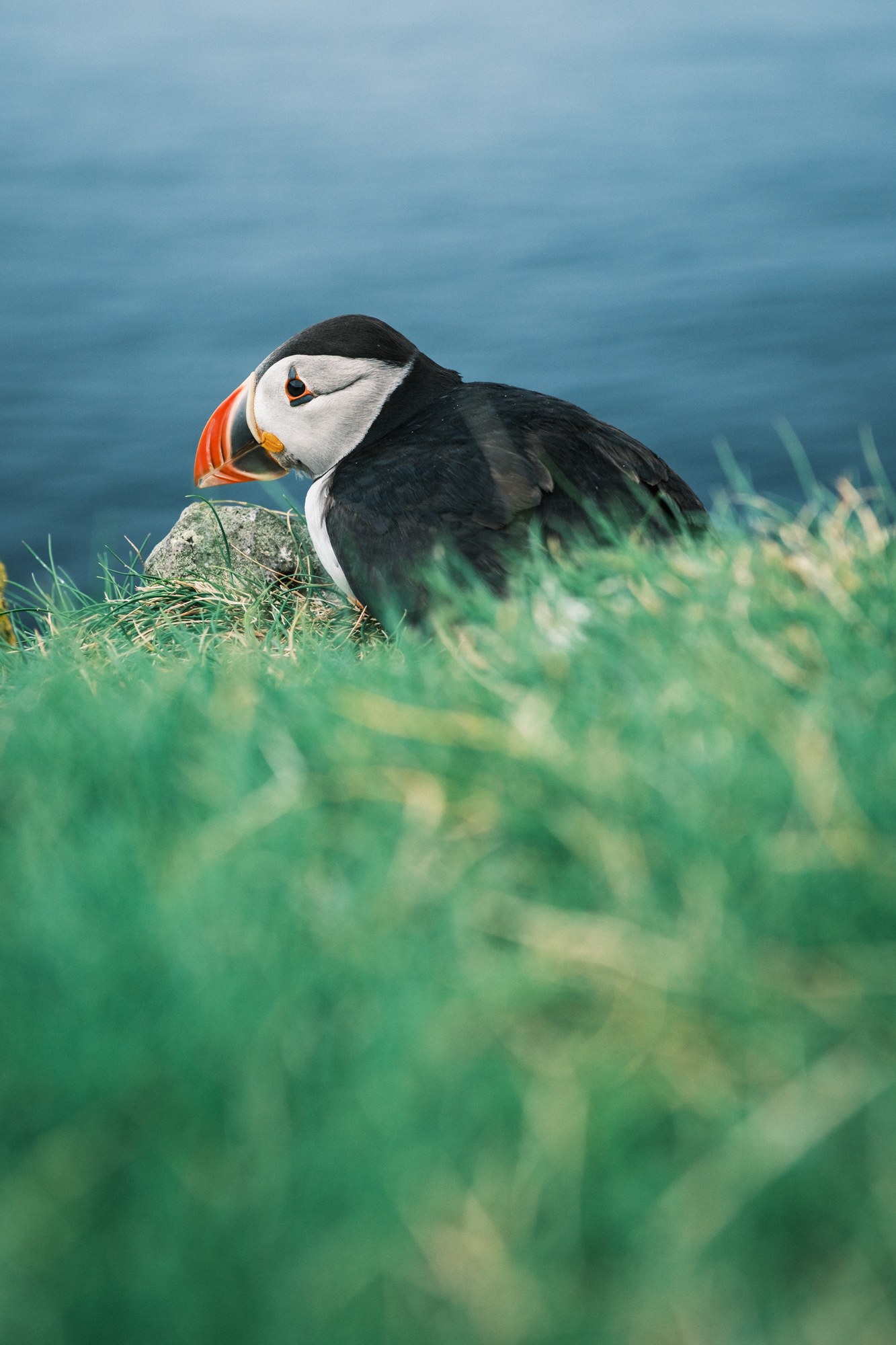
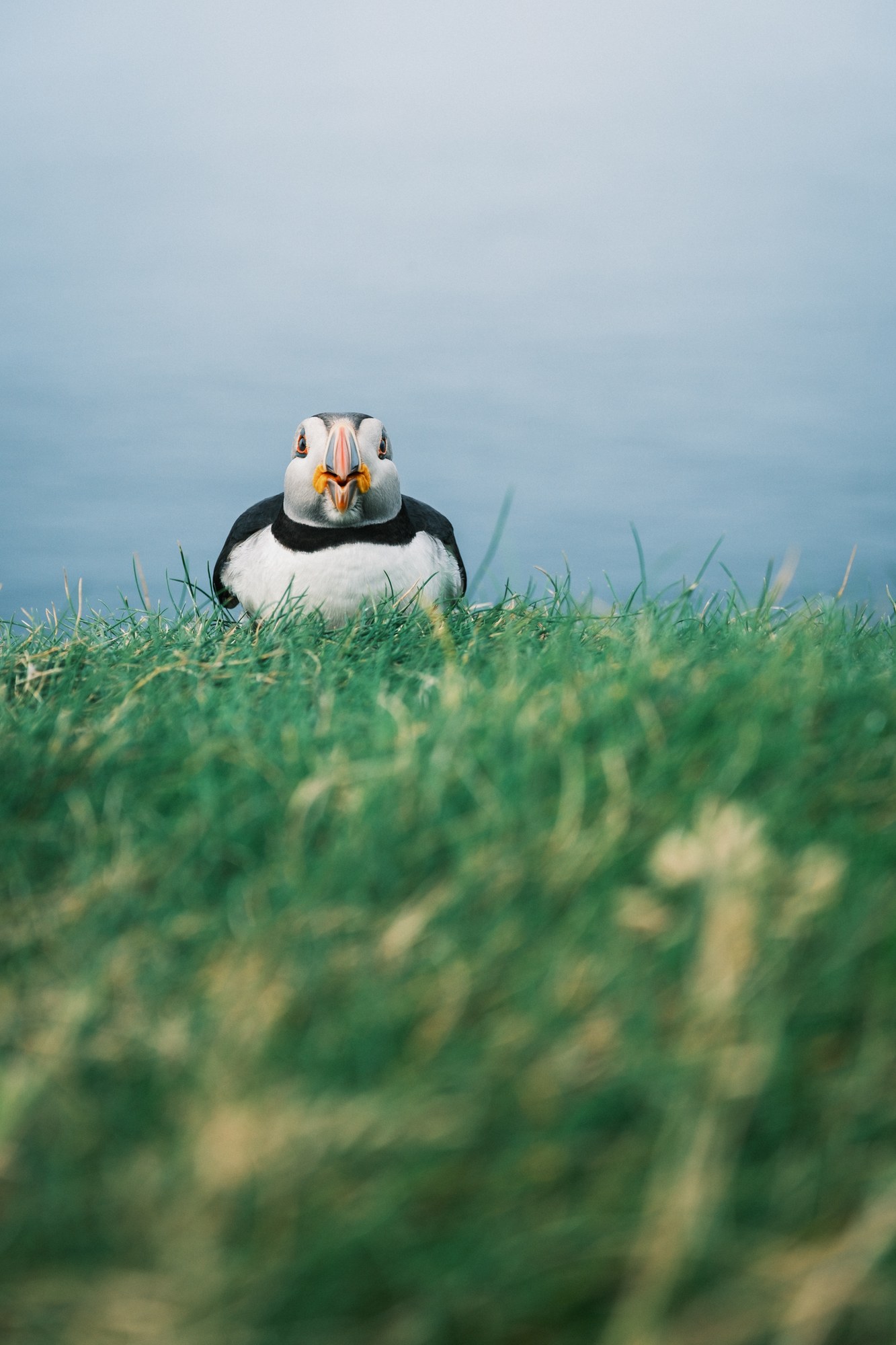
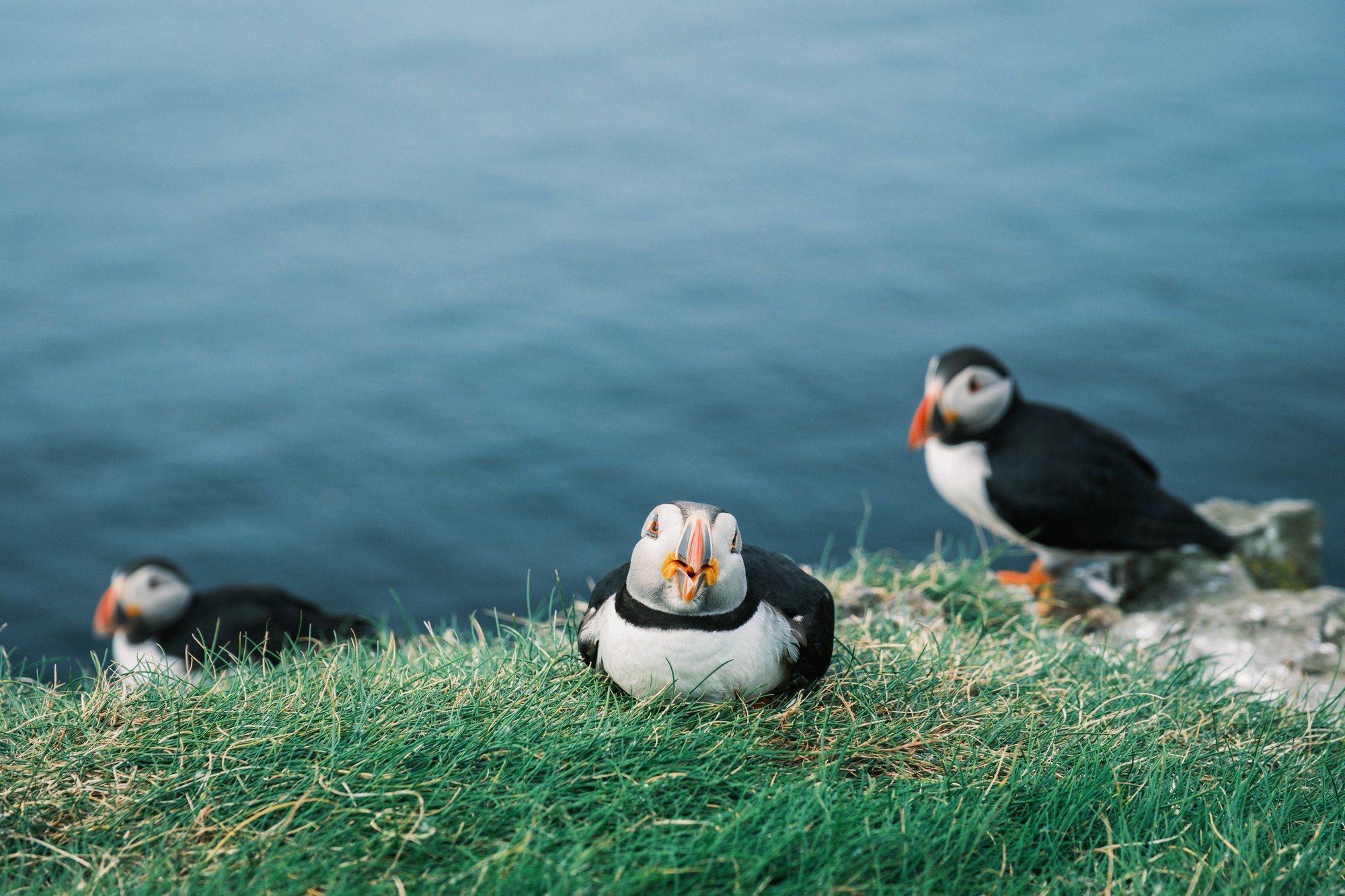
When it came to getting the right frame for my shots on Lunga, my instinct to hold the camera at eye level and shoot as I normally would produced nothing impactful. The fix was to get down on the ground entirely, lying flat with my arms stretched out, camera in front of me, and down to the puffins' level, which made my images so much better. More on that below.
Bird Photography Tip 2: Wide Aperture, Fast Shutter Speed
This is almost the opposite of how I'd approach a landscape.
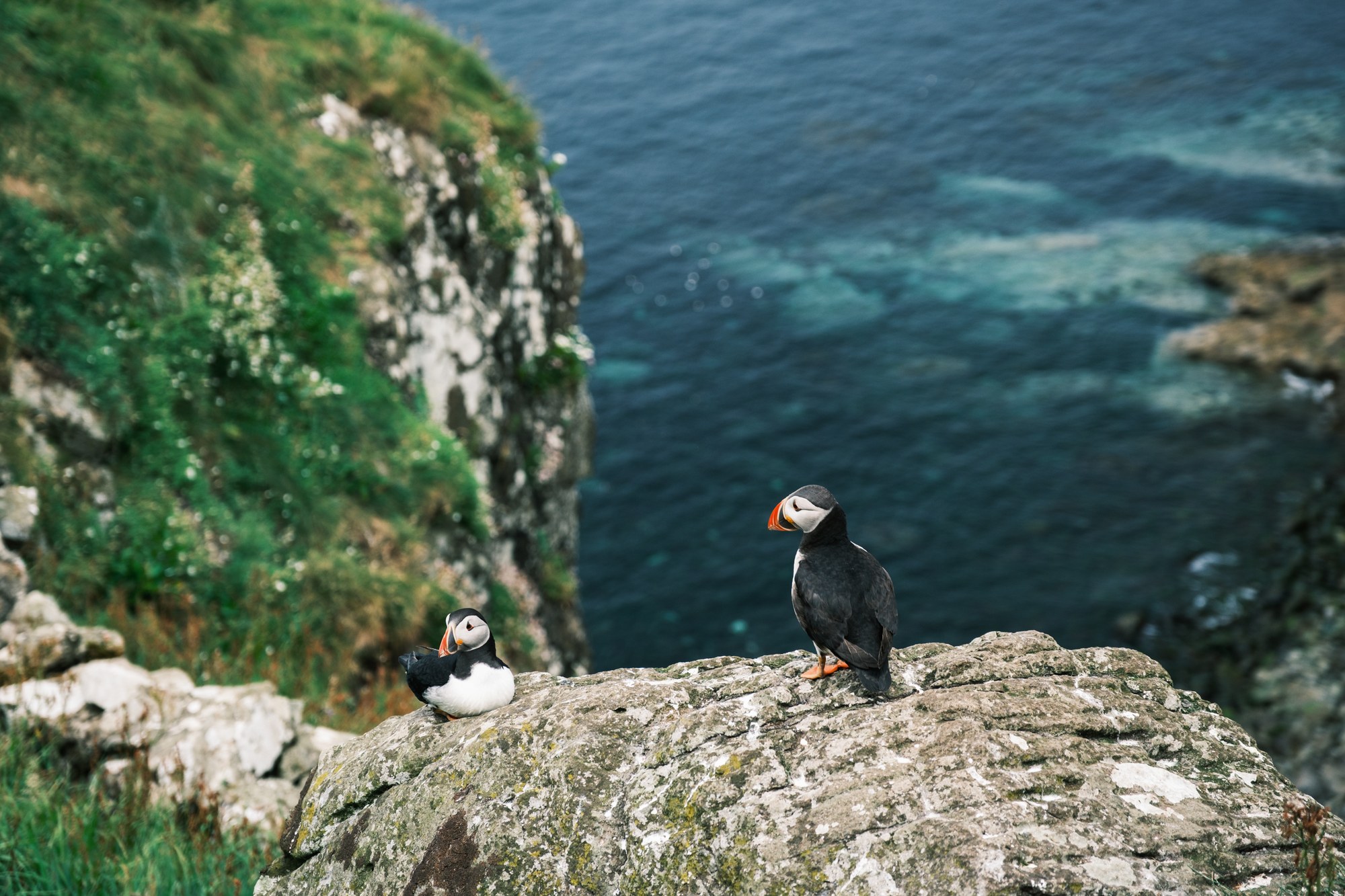
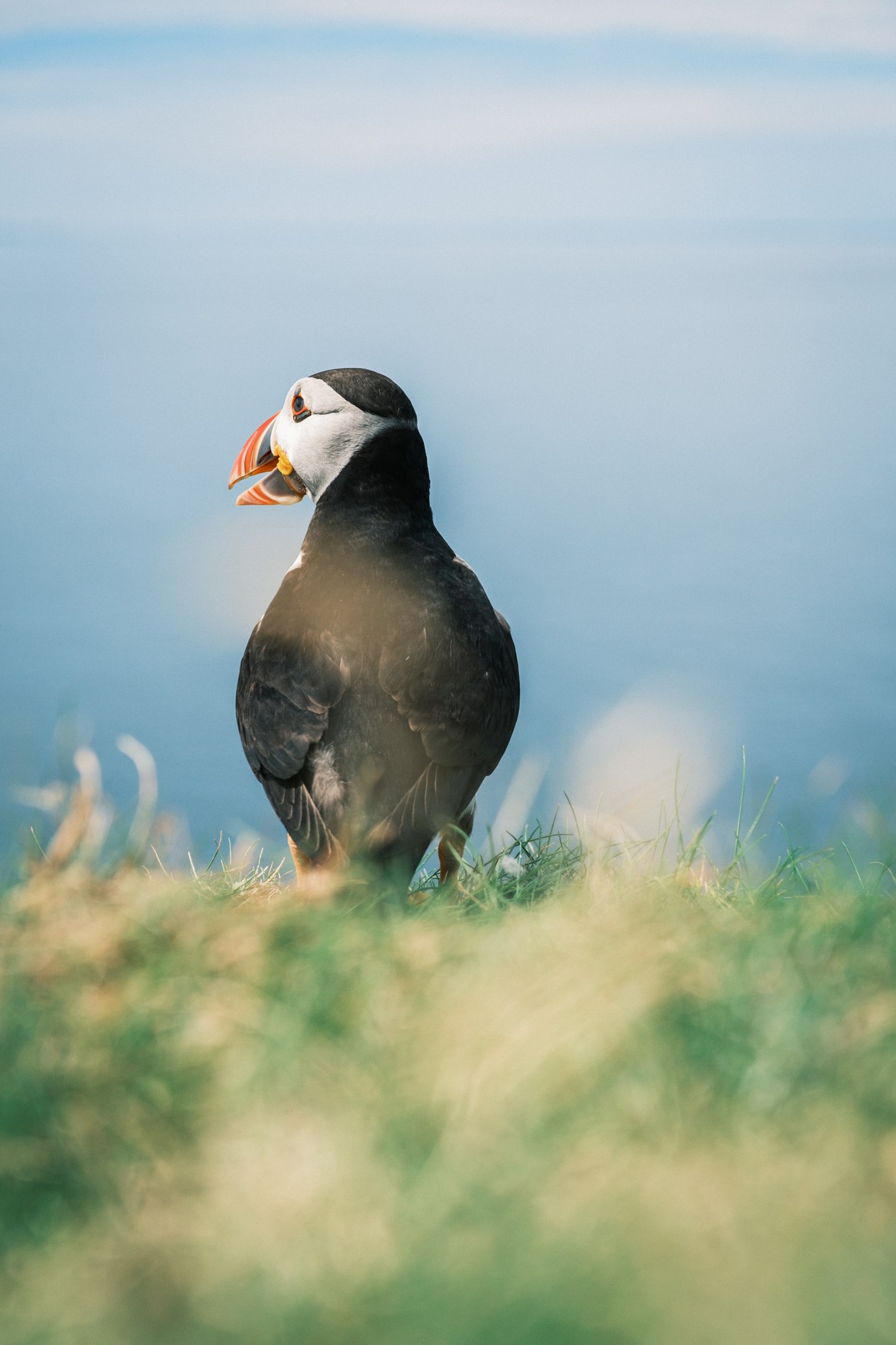
A wide aperture does two things: it lets in more light, helping achieve a fast shutter speed, and it throws the background out of focus so the subject sits clean against a soft, uncluttered backdrop. With the lens I was using, the FUJINON XF16-55mm F2.8 R LM WR II, that meant shooting at or close to f/2.8.
The fast shutter speed is a must. Birds move quickly and unpredictably, and anything too slow gives you blur where you want detail, and that contrast with landscape work is stark: I'd normally want everything sharp from foreground to horizon. Here, a wide aperture was the first thing I went for, and that shift in thinking was one of the biggest adjustments of the day.
Bird Photography Tip 3: Use Your Camera's Bird Detection Mode
It's worth digging into your camera's menu before dismissing subject detection as a gimmick.
Many modern cameras include AI-driven detection modes, and you might be surprised what's in there. On my Fujifilm X-T50, I found Subject Detection AF with a dedicated Bird option. I dialled it in, and the difference was noticeable and impactful, right away.
Before switching it on, I was struggling to hold focus no matter how hard I tried. As mentioned, birds move fast and change direction unpredictably, trying to focus as I normally would (manually or single point) while thinking about framing and exposure was too much to juggle at once. The moment Bird detection was on, the camera quickly and accurately locked onto the eye, beak, or head, and I could concentrate on composition instead.
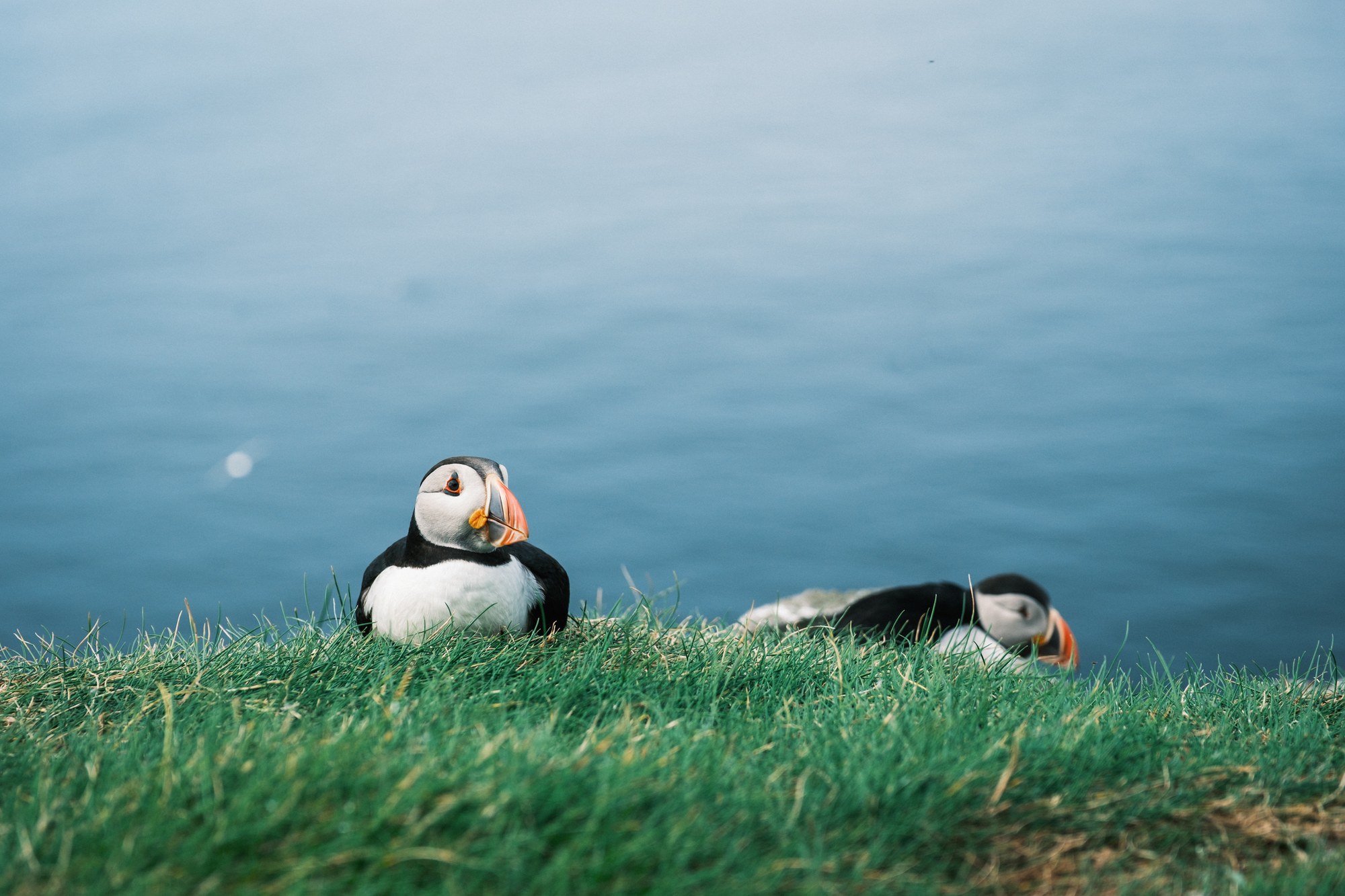
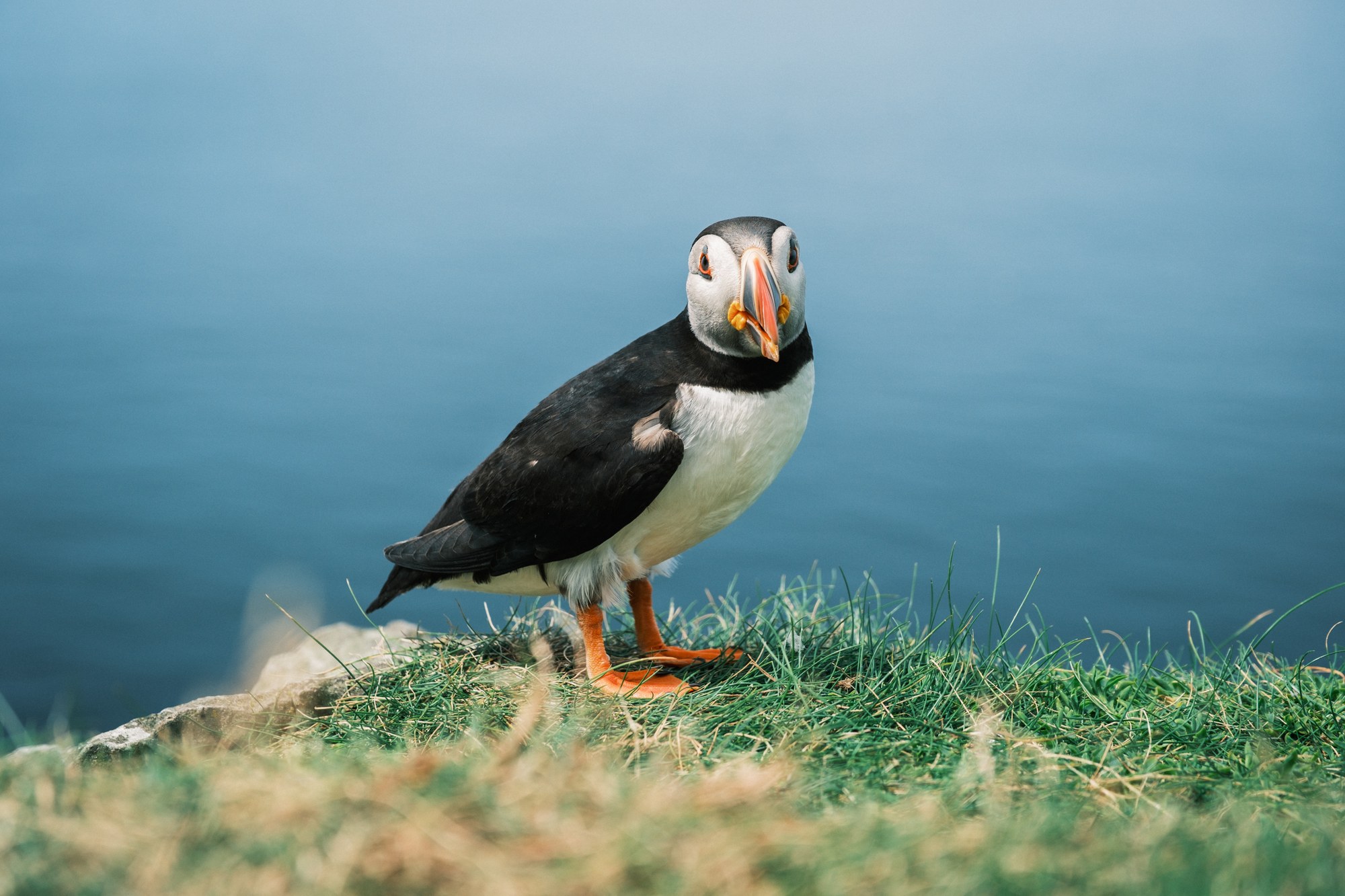
One thing to remember: always prioritise focus on the head, and ideally the eye. That's where the viewer's gaze goes first, and with puffins, especially, who stare straight back at you with remarkable confidence, nailing that eye focus is what separates a good image from a really great one.
Bird Photography Tip 4: Work With What You’ve Got When Starting Out
On Lunga, other photographers had enormous zoom lenses that made my kit look modest. With just the FUJINON XF16-55mm F2.8 R LM WR II on my Fujifilm X-T50, I assumed I wasn't going to get much. At 55mm on an APS-C sensor, you're not working with telephoto reach.
But I'm genuinely pleased with what I came away with. Rather than waiting for shots to come to me, I worked the situation: lying on the ground, stretching the camera toward the puffins, getting as physically close as I could safely. It required more creativity and patience than a long telephoto would, but produced images with a closeness and uniqueness that I'm proud of.
Will I invest in a longer zoom next time? Probably. But working within constraints pushed me to be more resourceful and creative. That skill, learning to maximise whatever you're holding, is one of the most transferable things you can develop as a photographer.
Bird Photography Tip 5: Don't Forget to Enjoy It
When I'm working on a landscape or travel series, I push hard. That drive is generally a good thing, but it can become a burden and take the enjoyment out of actually being there.
When you're trying something new, permit yourself to let go of that pressure. Don't chase perfection on your first attempt.
One of the things I loved most about being on Lunga was simply hanging out with the puffins: watching them, observing how they moved, taking pictures when the moment felt right rather than working through a shot list. Writing this now, that's what's stayed with me most. Not whether any image is technically perfect, but the experience of being in that wild, untamed place.
Enjoy it. Let the experience lead, and trust that the images will follow. And whatever subject you're thinking about trying, take that mindset with you.
Gallery of Images
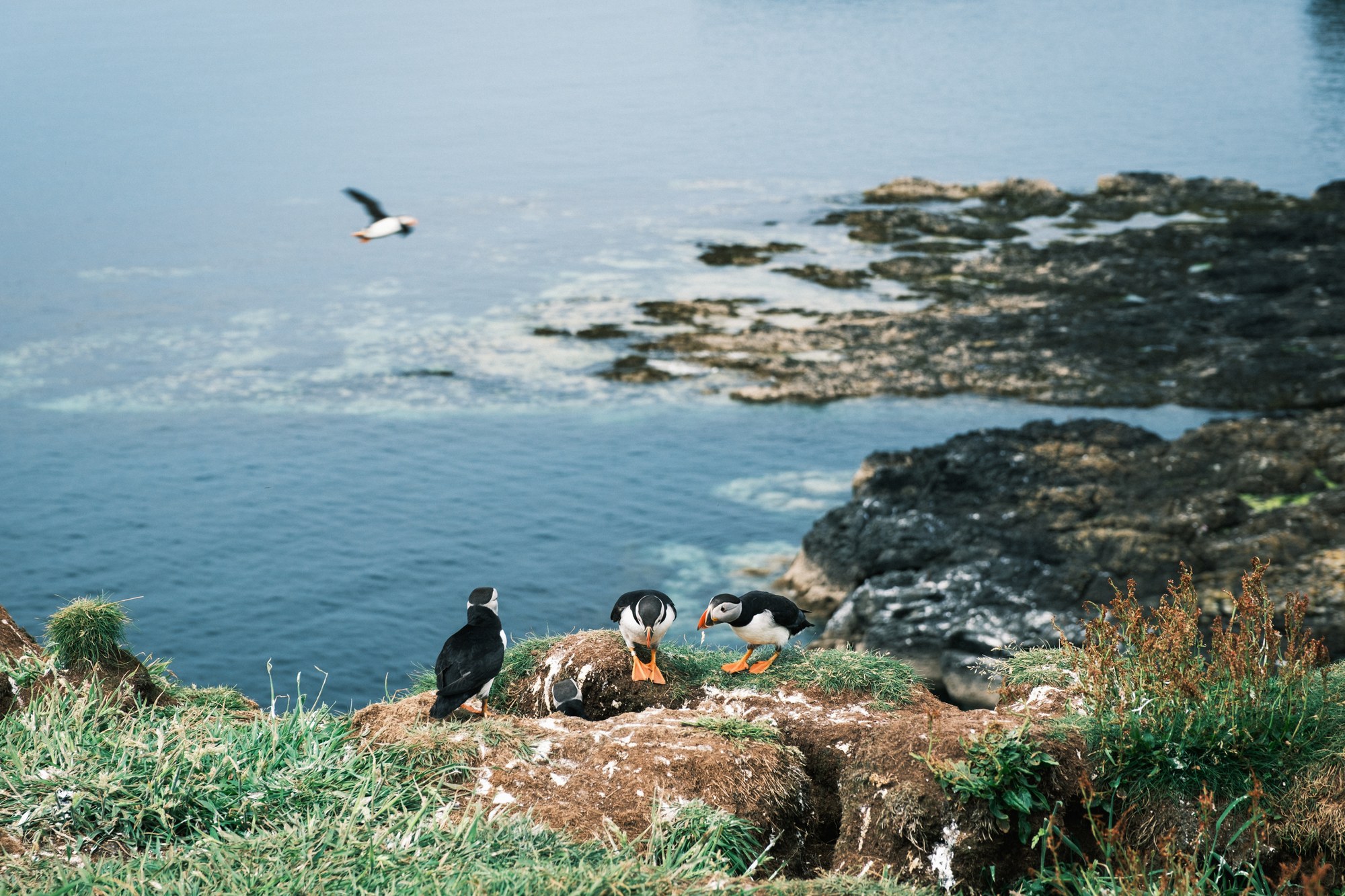
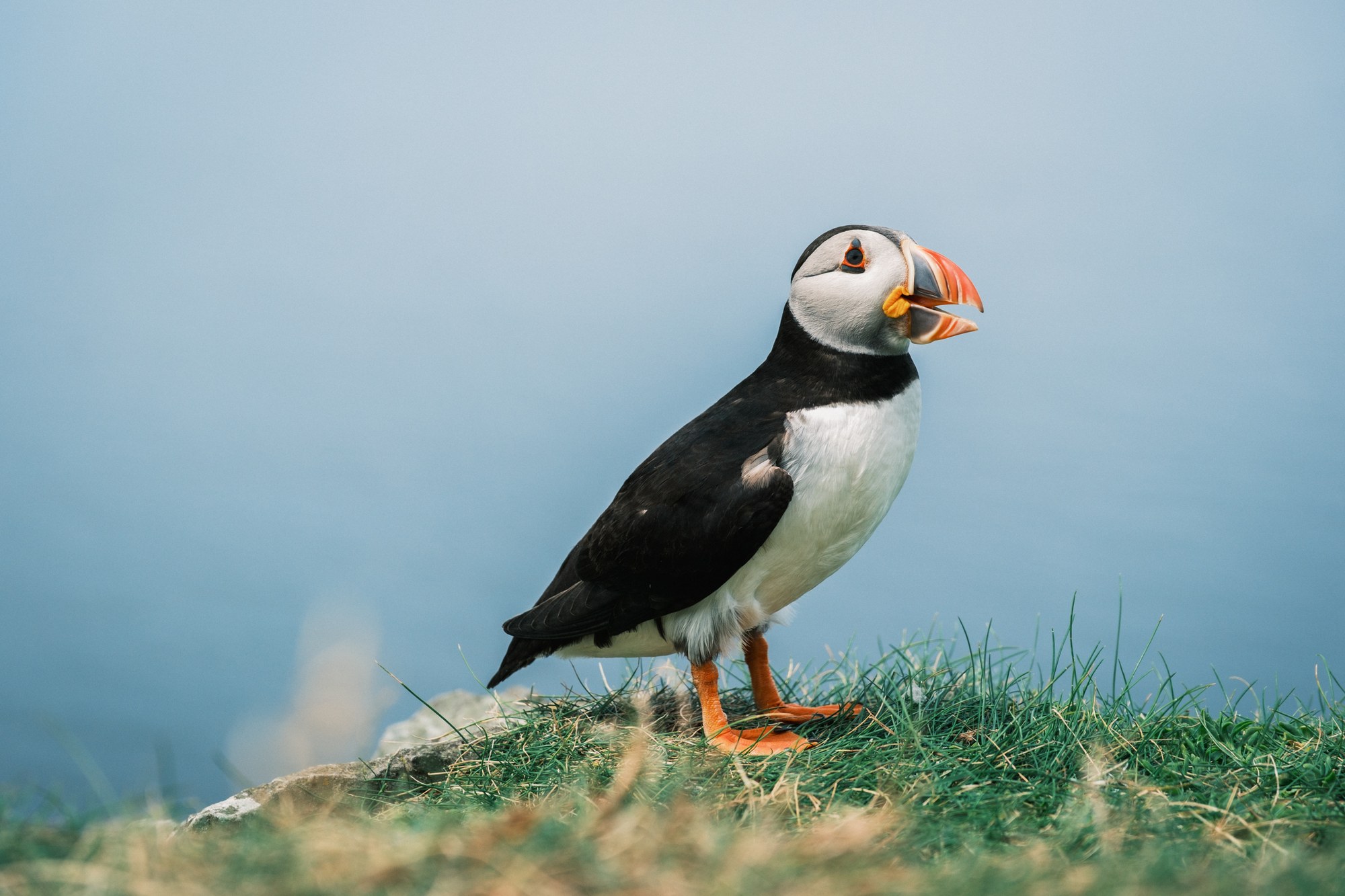
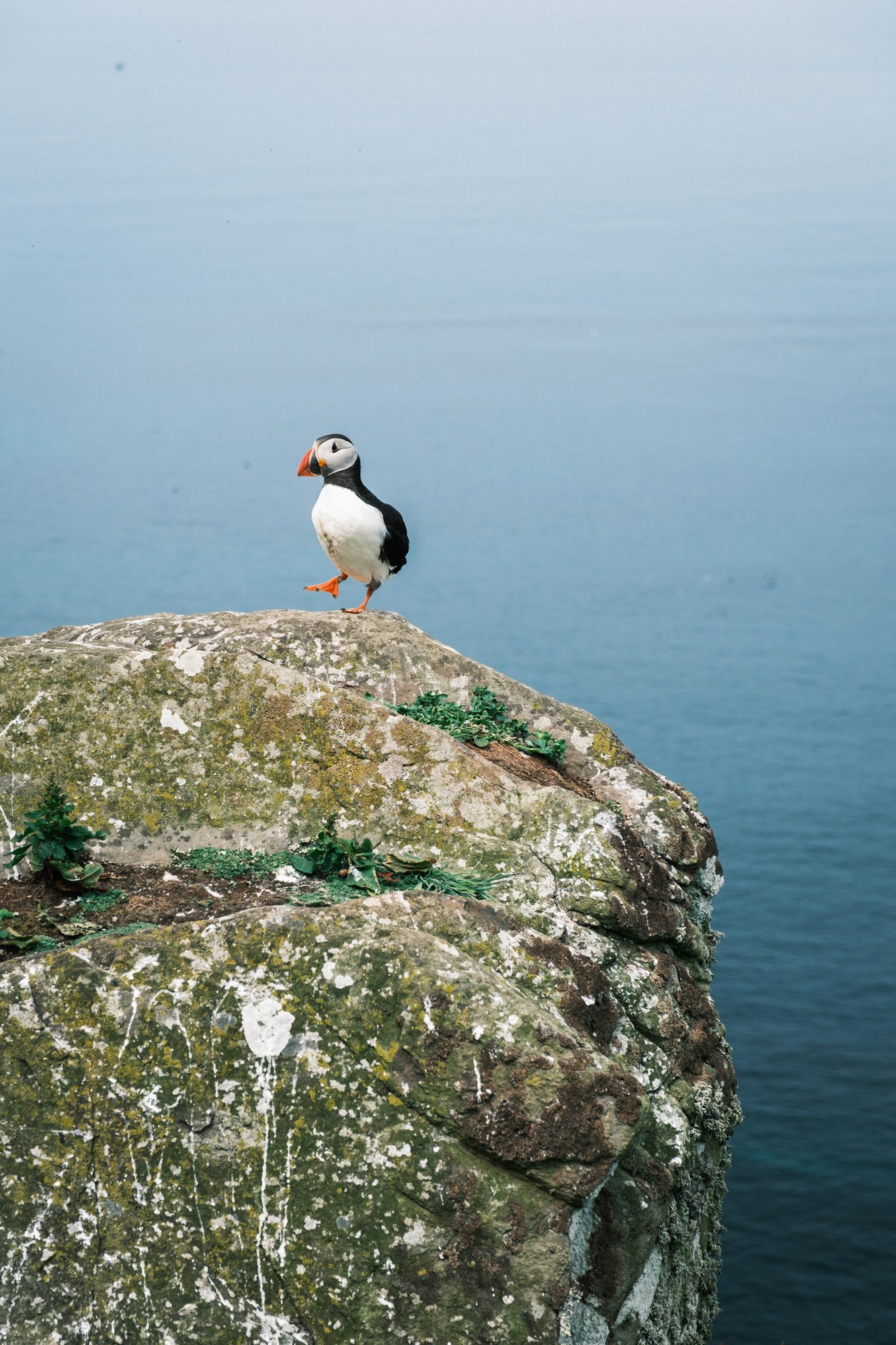
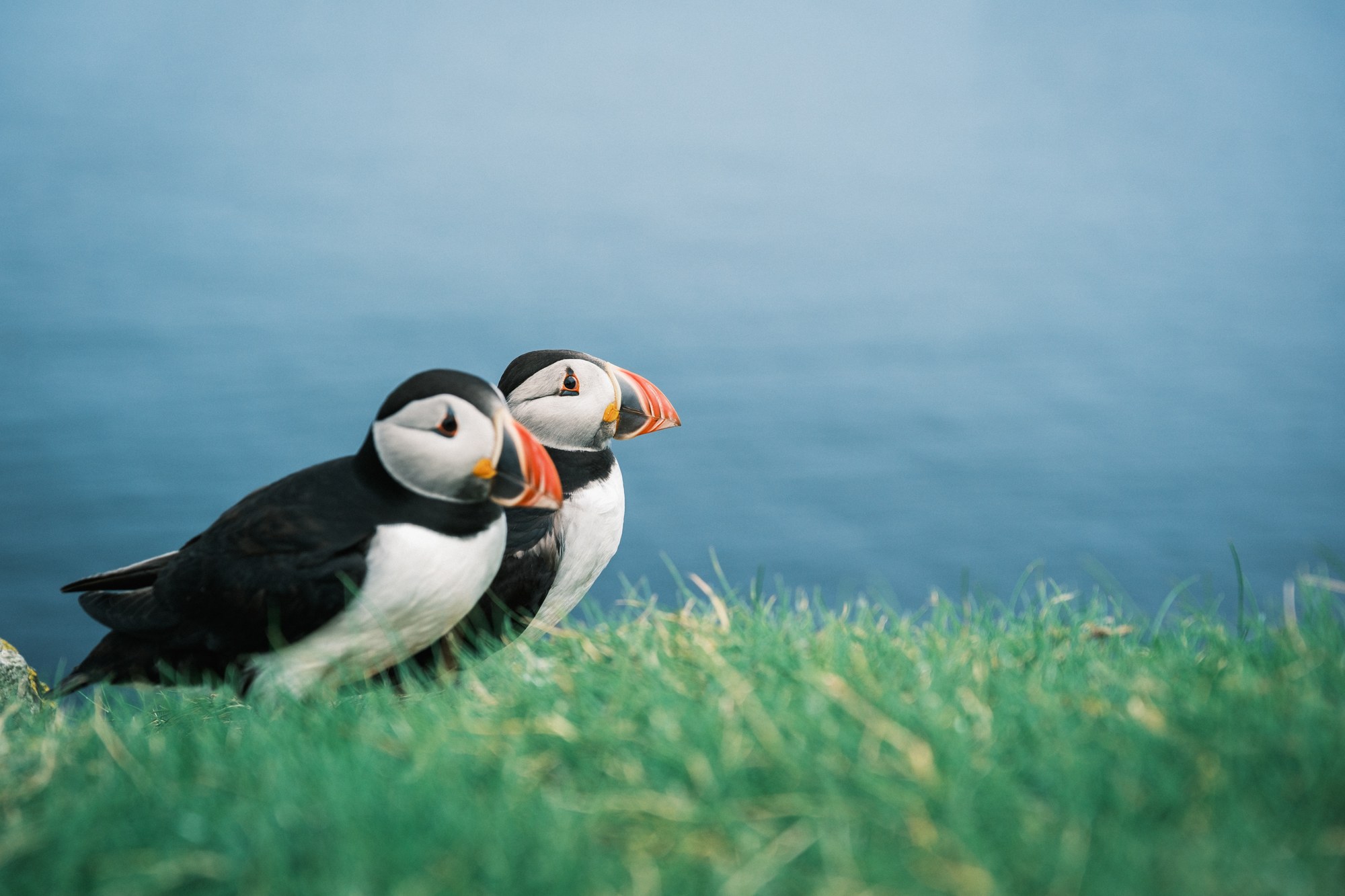
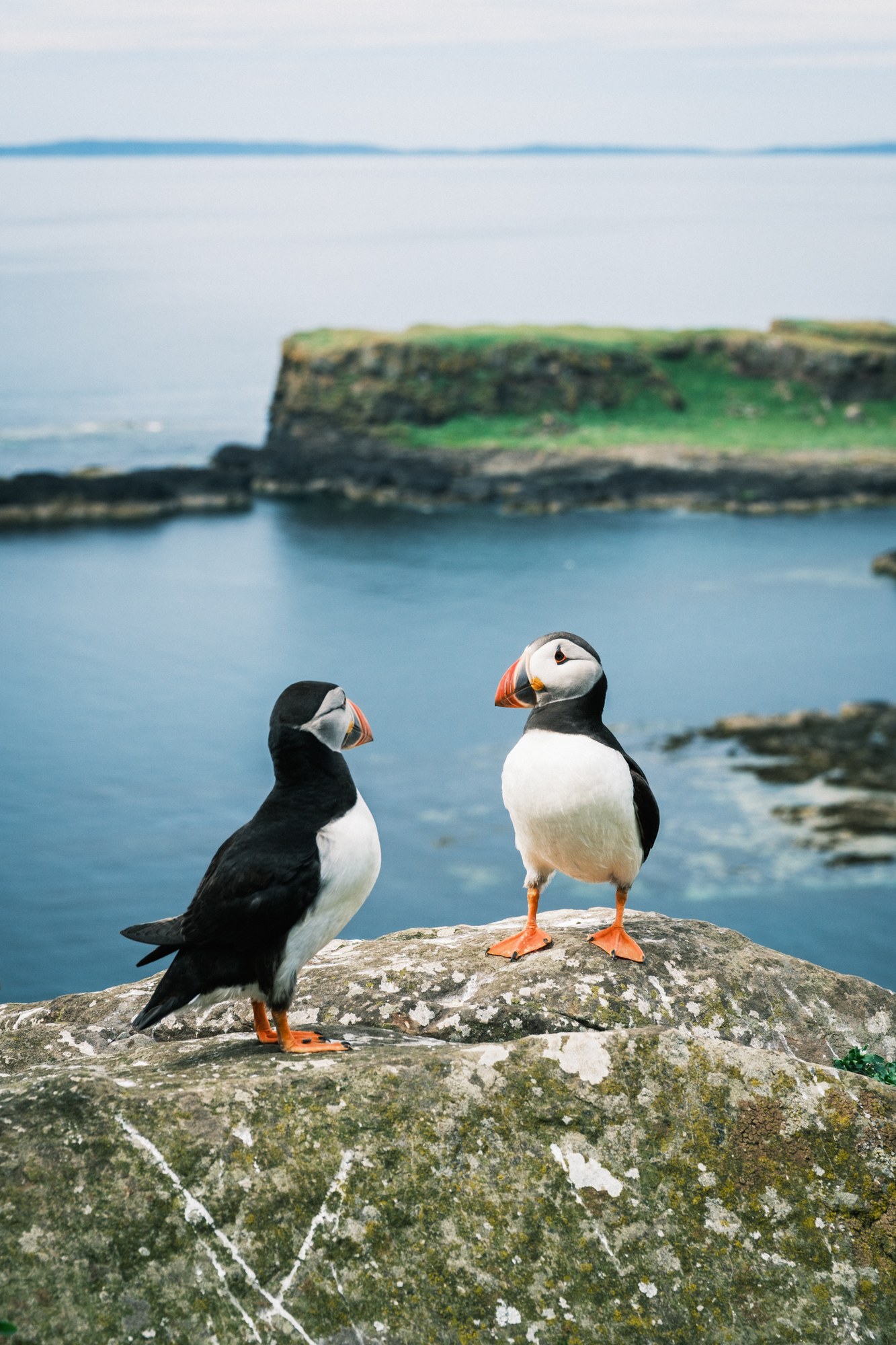
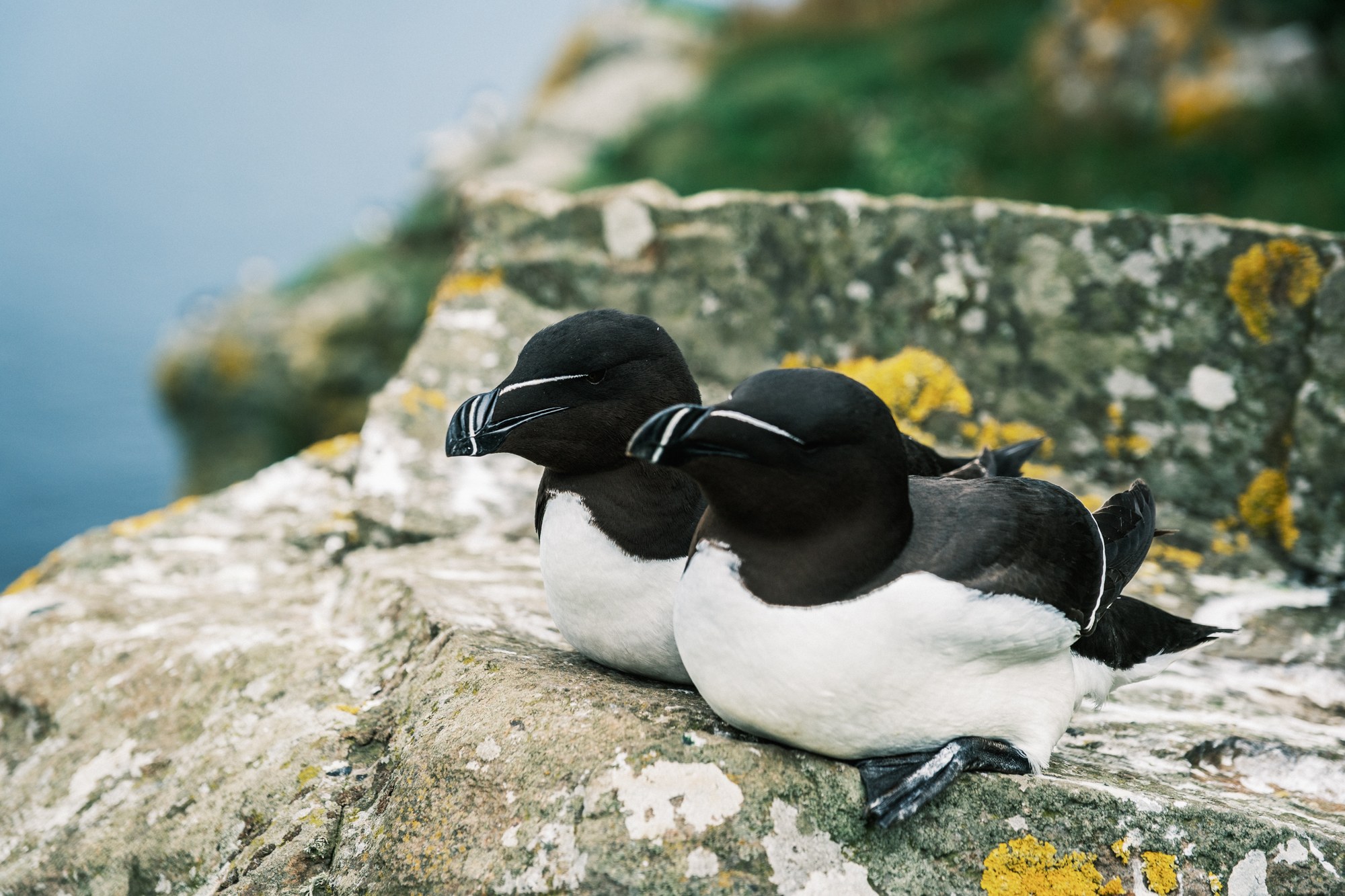
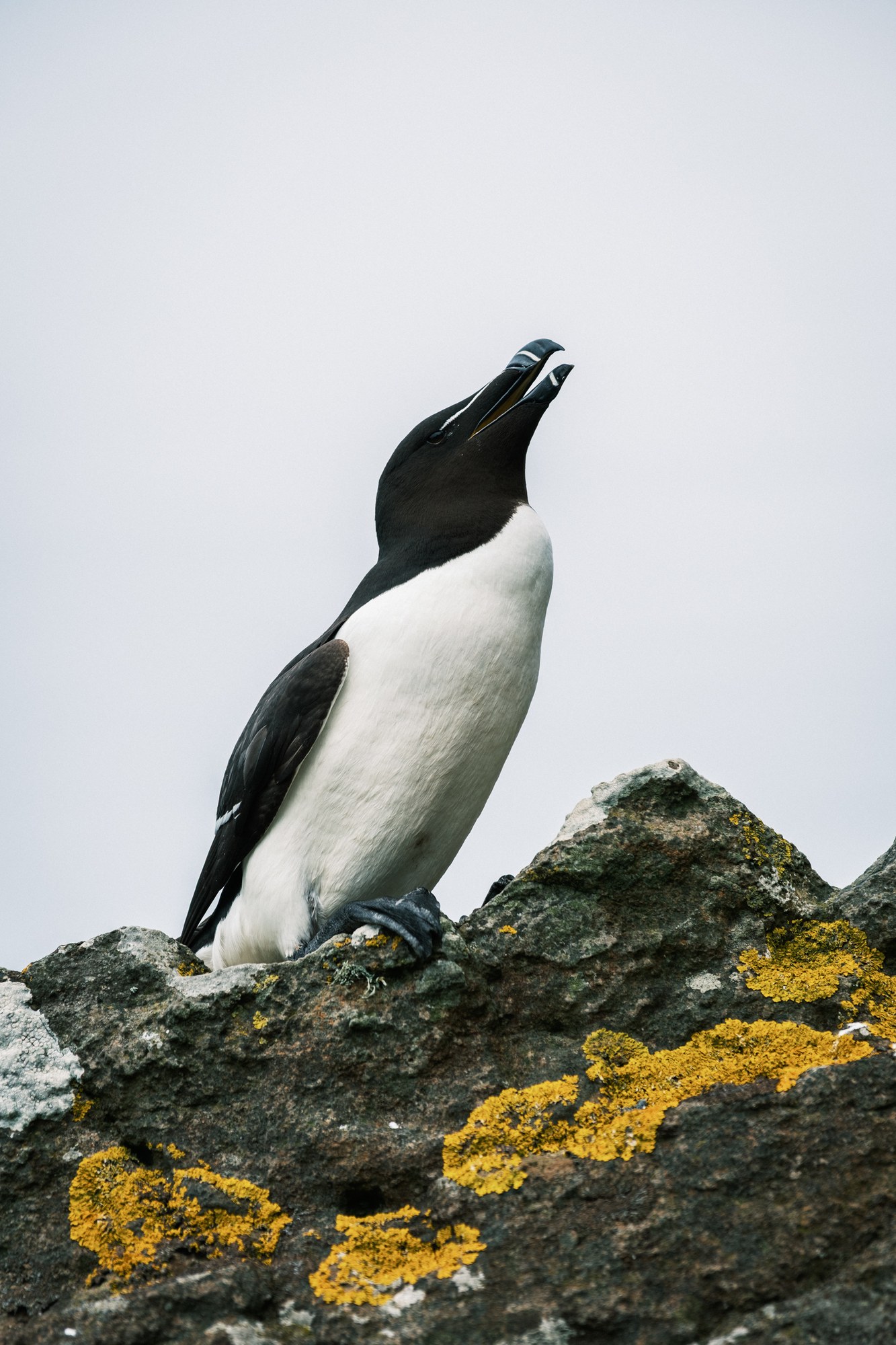
Below you'll see a range of highlights from my trip, alongside those dotted throughout the article. I hope you enjoy viewing these just as much as I enjoyed taking them, and I hope it demonstrates too, just what you can do with a new photography subject when you put your mind to it.
,
Final Thoughts
Trying bird photography for the first time was one of the best decisions I've made for a long time. I love the images I came away with, and the response from friends, family, and followers has been genuinely encouraging, with more than a few suggesting I try my hand at doing more wildlife photography in the future.
Was the FUJINON XF16-55mm F2.8 R LM WR II the ideal lens for the job? Probably not. A longer zoom would have given me more reach. But I loved using it: sharp, weather-sealed, and completely reliable in an unfamiliar situation. My Fujifilm X-T50 earned its place (as always), too; and this time the Subject Detection AF made a real difference to my keeper rate. Also, processing everything in Classic Negative, my go-to Film Simulation, turned out to suit Scottish coastal wildlife rather beautifully.
Would I do this again? Absolutely. Next time, I'd consider bringing a longer lens and going in with more confidence. But everything else would stay the same.
If you're sitting on the fence about trying a new subject, I hope this piece nudges you closer to just going for it. Maybe it's wildlife. Maybe it's street, or astro, or macro. Whatever it is, the leap is worth taking. You don't need perfect gear or a perfect plan. But you do need curiosity, a willingness to start from scratch, and, if you can manage it, a boat to a small Scottish island full of puffins!


