


Think wonky lines or odd compositions always need fixing? Think again. Here's why imperfection could be a great thing for your photography…
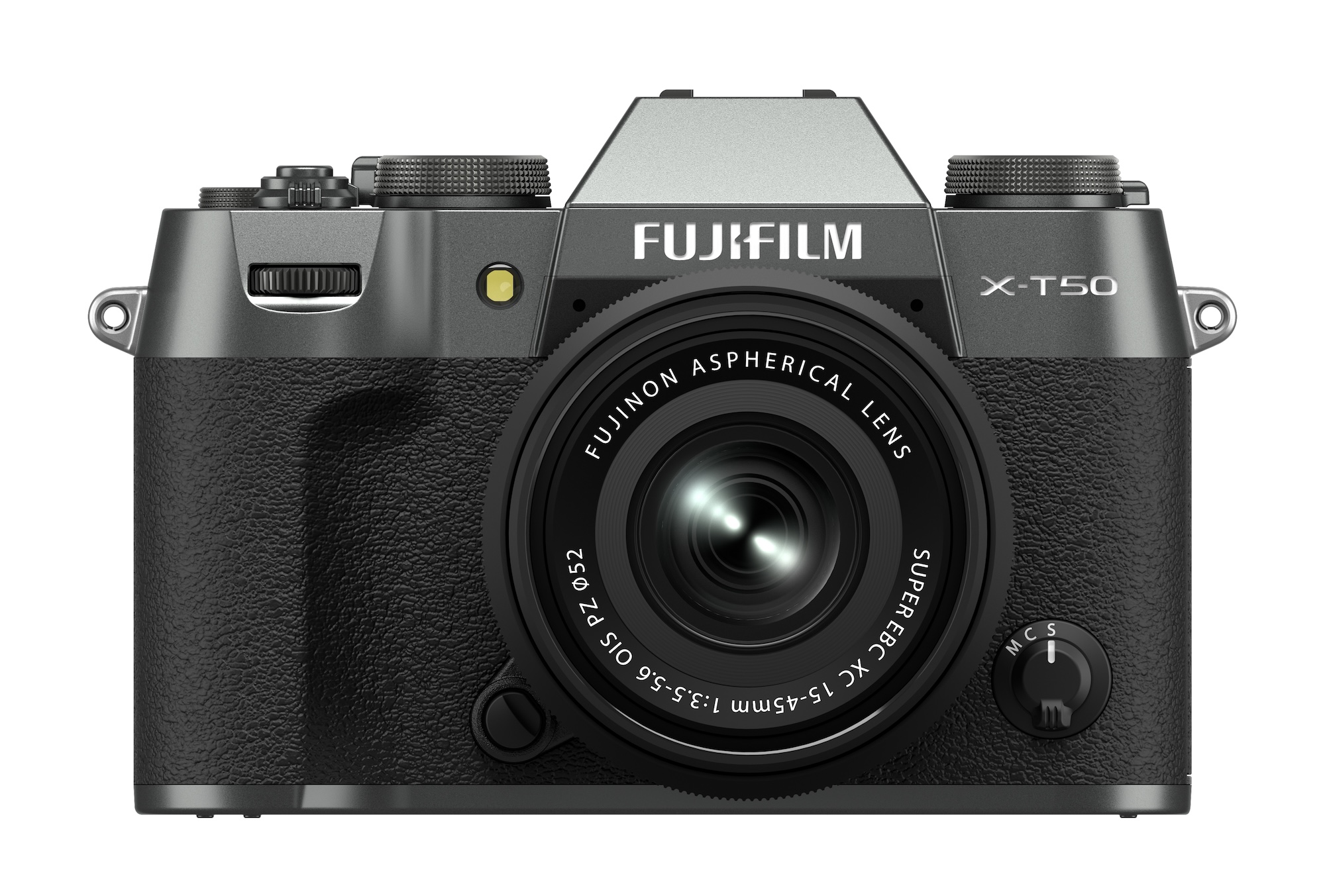
Photography gear used:
- Fujifilm X-T50 Mirrorless Camera
- Fujifilm XC 15–45mm f/3.5–5.6 OIS PZ Kit Lens
- Fujifilm Classic Negative Film Simulation
Why Wonky Lines and Imperfection Can Make Your Photos Look Great (Within Reason)
If you regularly shoot street scenes, architecture, or landscapes, you'll know this feeling… You get home, look at your images on your screen, and there you see it: a slightly tilted building, a horizon that's just a smidge off, lines throughout your composition that aren't angular, or just a bit of an unusual composition. The instinct? Fix it by straightening your lines and altering your frame.
But in this article, I'd like to make the case for not doing that. Or at least, not always.
Intrigued? Read on to find out why you should keep some of these imperfections in your final image (within reason, mind, and I'll get to that later…), along with visual examples, all taken on a recent trip to Praha, Czech Republic.

| Fujifilm X-T50 · XC 15–45mm f/3.5–5.6 OIS PZ · 23.5mm · f/11 · 1/180s · ISO 125 · Praha
Why The Urge To Straighten and Fix Everything In Our Photos?
It's understandable, honestly. We live in an era where making an image technically perfect has never been easier. Smartphones autocorrect perspective before you've even pressed the shutter. Editing apps offer one-click horizon levelling and cropping suggestions, and it's incredibly satisfying to use the tools manually as well, watching your images transform in real time on the screen. Simply put, the tools to fix everything in your images are always right there, and so is the temptation to use them.
I've done this myself, and admittedly, more and more these days, too. I spend a huge amount of time in post-production correcting angles, changing the crop and framing of my subject, and straightening lines, and then changing them again, and again and again, never being quite satisfied with the result.
Often, too, even after I've finished tinkering, any lines and horizons still feel wonky to my eye, or the final version of my picture comes off as a little flat and lifeless. Technically correct, but lacking the allure of why I took those pictures in the first place.
So I started leaving things alone. And I noticed something: the slightly imperfect version of a shot was the better one.

| Fujifilm X-T50 · XC 15–45mm f/3.5–5.6 OIS PZ · 22.1mm · f/11 · 1/60s · ISO 200 · Hlavní nádraží, Praha

| Fujifilm X-T50 · XC 15–45mm f/3.5–5.6 OIS PZ · 15mm · f/13 · 1/80s · ISO 200 · Praha

| Fujifilm X-T50 · XC 15–45mm f/3.5–5.6 OIS PZ · 38.5mm · f/13 · 1/100s · ISO 125 · Praha
What Does It Mean To Embrace The Imperfect In Your Photos?
First of all, I want to be clear about something here. I do not mean that embracing the imperfect gives you a licence to be lazy with your compositions. There's a huge difference between intentional imperfection and a sloppy shot you couldn't be bothered to fix. That may sound harsh, but it's very true, and with the latter, it really comes through in your photos.
What I'm talking about is making a conscious decision to let some of the world's wonkiness and imperfections come through in your photos. Because, to be honest, the world is wonky. Look around you, you'll see the streets aren't perfectly aligned, some buildings can look out of place, and your perspective can shift dramatically depending on where you're standing. As I mentioned earlier, when you try to iron all of those imperfections out in post-production, you risk losing the thing that made the scene interesting in the first place.

| Fujifilm X-T50 · XC 15–45mm f/3.5–5.6 OIS PZ · 29.6mm · f/11 · 1/60s · ISO 400 · Praha

| Fujifilm X-T50 · XC 15–45mm f/3.5–5.6 OIS PZ · 22.8mm · f/13 · 1/125s · ISO 200 · Praha

| Fujifilm X-T50 · XC 15–45mm f/3.5–5.6 OIS PZ · 19.2mm · f/9 · 1/500s · ISO 250 · Praha
The Imperfect is a Trend in Photography Right Now
Look around at the images you see today in 2026, especially on social media and in print. There's been a real shift away from the hyper-polished aesthetic that dominated photography for years.
There are several reasons for this. First, analogue photography and its natural imperfections have surged in popularity, especially over the last five years, and candid, unpolished images regularly outperform technically immaculate ones. Audiences respond to images that feel true and honest. Because really, right now, it's more evident than ever that we're living in an imperfect world.

| Fujifilm X-T50 · XC 15–45mm f/3.5–5.6 OIS PZ · 15mm · f/11 · 1/250s · ISO 250 · Praha

| Fujifilm X-T50 · XC 15–45mm f/3.5–5.6 OIS PZ · 42mm · f/13 · 1/250s · ISO 200 · Praha
Take all of the above and embrace the fact that this is the creative environment photographers are shooting in right now. So give yourself permission to be imperfect with your photography, too. You'll reap the benefits from it.
4 Practical Ways To Let Imperfections Come Into Your Frame:
1 Deliberately don't correct much in post
Edit for all the usual things like exposure, contrast and colour, but leave angles completely alone. Look at the results with an open mind. Which images feel better for the freedom? Some might surprise you.
2 Shoot at the wider end of your lens
Wider focal lengths can really lend themselves to this approach. The wide perspective naturally introduces a bit of wonkiness and distortion, and a slight tilt feels right at home in a wide shot in a way that it might not at longer focal lengths.
3 Lean into converging verticals in architecture
There's a reason architecture photographers have traditionally worked hard to keep vertical lines straight, but shooting upward at a building with those lines converging toward the sky can look genuinely dramatic. Try it deliberately on your next architecture shoot. You may prefer it.
4 Look for a naturally imperfect scene
Markets, back streets, busy transport hubs, layered urban environments. These are places where the world itself is a little chaotic, and your images should reflect that.
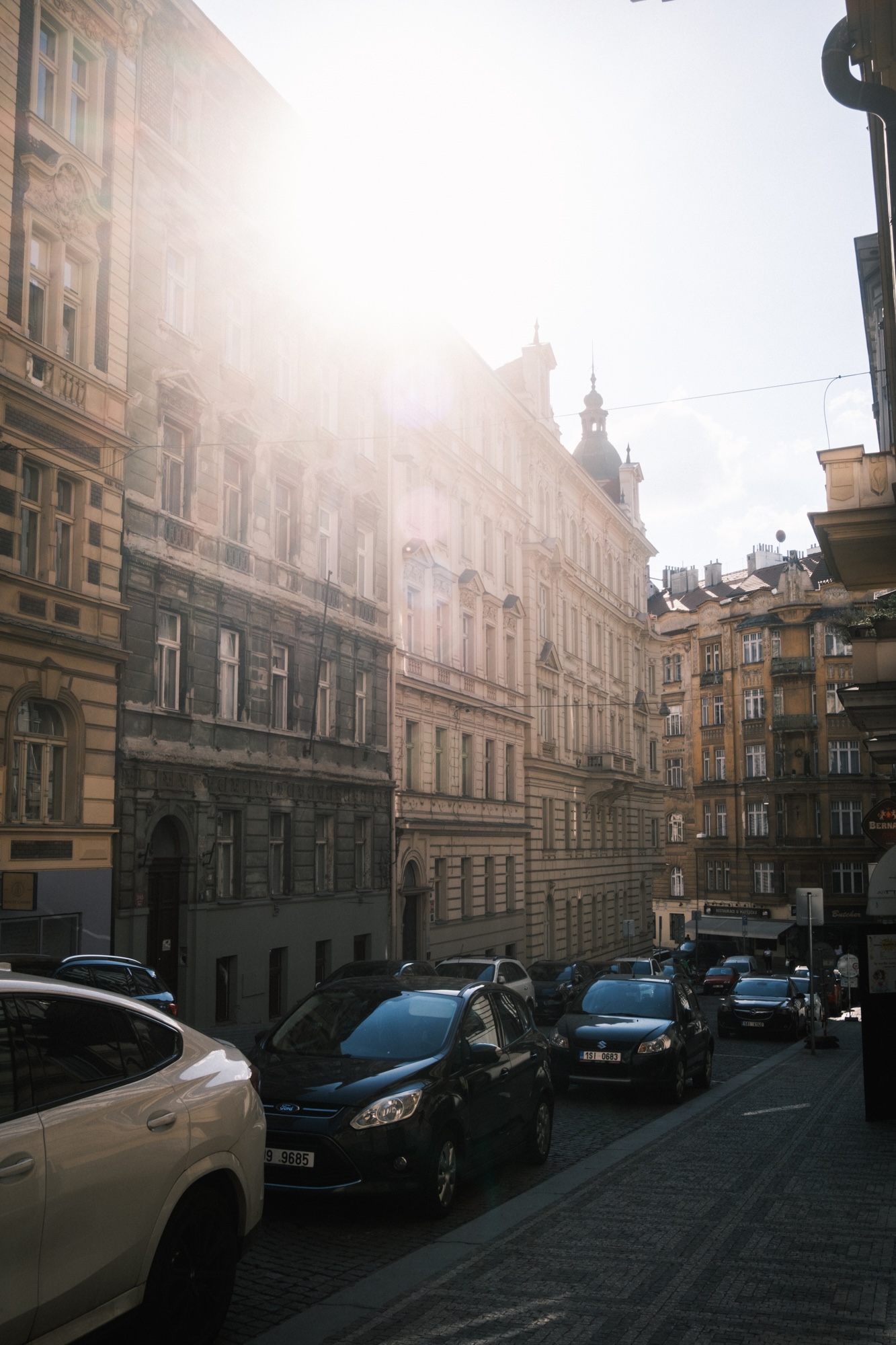
| Fujifilm X-T50 · XC 15–45mm f/3.5–5.6 OIS PZ · 24.2mm · f/13 · 1/160s · ISO 250 · Praha

| Fujifilm X-T50 · XC 15–45mm f/3.5–5.6 OIS PZ · 23.5mm · f/11 · 1/180s · ISO 125 · Praha
When To Keep Things Straight In Your Image Compositions (The "Within Reason" Part)
I said "within reason" in the title, and I mean it.
There are absolutely situations where a tilted horizon, unusual composition, or wonky lines are just wrong, and this goes back to the point I made earlier about sloppiness that should be fixed.
For example, a landscape shot where the sky meets the sea and the horizon is visibly slanted and off-level will feel like a mistake to the viewer's eye, not a choice. Or, for example, an architectural image (especially if it's a paid commission) that requires accurate vertical lines. In situations like these, yes, you need to pull out the straightening tool in post-production.
The skill you're building here is really about knowing the difference: when does the imperfection add to the image, and when does it just make it look like you weren't paying attention and, sorry, a bit lazy with your photography compositions or editing?
That judgement develops with practice and, by honestly looking at your own work over time, will develop. Sometimes you'll look back at your images and think, "I should have straightened that," or, on the other hand, you may think "it's too rigid, or I've overdone it."
Kit: How The Fujifilm X-T50 Works Well With Photographing the Imperfect
There's something about the X-T50 that feels particularly well-suited to this style of shooting, with its compact body and the way it encourages you just to get out there and shoot rather than endlessly tweak settings. Paired with the 15–45mm kit lens, it's a versatile little setup. The lens covers a useful range for street, landscape, and architecture work, and it's light enough that you don't feel burdened while carrying it.
If you're in the Fujifilm ecosystem too, you'll know that the film simulation you use also plays a part in all of this. I've been shooting with Classic Negative recently, and I find it pairs brilliantly. It has that contrasty, editorial documentary quality that suits images with imperfection far better than something more clinical would.
Before settling on Classic Negative, I used Classic Chrome a lot, which is another great option if you prefer a slightly more muted look, but Classic Negative feels right for the kind of work I'm describing in this article. With so many Fujifilm film simulations available, I strongly encourage you to try them all and find the one that works best for you.

| Fujifilm X-T50 · XC 15–45mm f/3.5–5.6 OIS PZ · 38.5mm · f/11 · 1/125s · ISO 400 · Praha
Final Thoughts
Photography is a personal practice and a reflection of how you see the world. It should never be dictated by how a straightening tool or an algorithm thinks it should look.
Many of my favourite images from the X-T50 aren't technically perfect; they are more about capturing a moment than being tightly curated in post-production.
So next time you're reviewing your shots and you notice a building leaning slightly, or a street scene where nothing quite lines up, pause before you reach for that straightening tool. Ask yourself honestly whether the imperfection is part of what makes the image work.
More often than you might expect, the answer will be yes.
The world isn't perfect. Your photography doesn't have to be either. And that's actually a wonderful thing.

| Fujifilm X-T50 · XC 15–45mm f/3.5–5.6 OIS PZ · 19.2mm · f/11 · 1/180s · ISO 160 · Chrám Matky Boží před Týnem, Praha


