


Focus Editor Philip strips eight of his own photographs back to their bare geometry and discusses the compositional elements of each frame. The infographic below shows how to apply each technique when you're shooting

Want to keep this infographic handy?
Download our free PDF.
Composition is the one part of photography that costs nothing. You can't buy your way to a better frame, and no amount of kit will place a subject where it needs to go.
The trouble is that composition is usually taught as a list of rules, which is exactly the wrong way round. When I look back at frames of mine that work, I'm rarely thinking about that. What I look for is far simpler, like a line pulling the eye somewhere, a gap giving a subject space to breathe in the frame, or elements at different distances within the frame to create a sense of space.
So I've tried something different: here I took eight of my own photographs, from Saltwick Bay in North Yorkshire to a metro station in Stockholm, and stripped each one back to its underlying geometry. The photograph sits above, the diagram sits below, and you can see the technique laid bare in each frame.
Beginner Composition Techniques in Photography
Eight ways to arrange what is in your scene, and how it positively impacts your frame
Composition in photography is simply where the visual elements of your scene sit in the frame.
Composition determines what a photograph is about and can help tell its story. A solid composition also makes your photography aesthetically pleasing. These eight techniques are the ones worth learning first. Note that it's also common for these compositions to overlap in a single frame, and most good photographs use two or three at once.
Each panel strips a photograph back to its underlying geometry. The scene is in black, the technique in orange.

Rule of thirds
Divide the frame into nine and place your subject(s) where the lines cross, rather than dead centre.
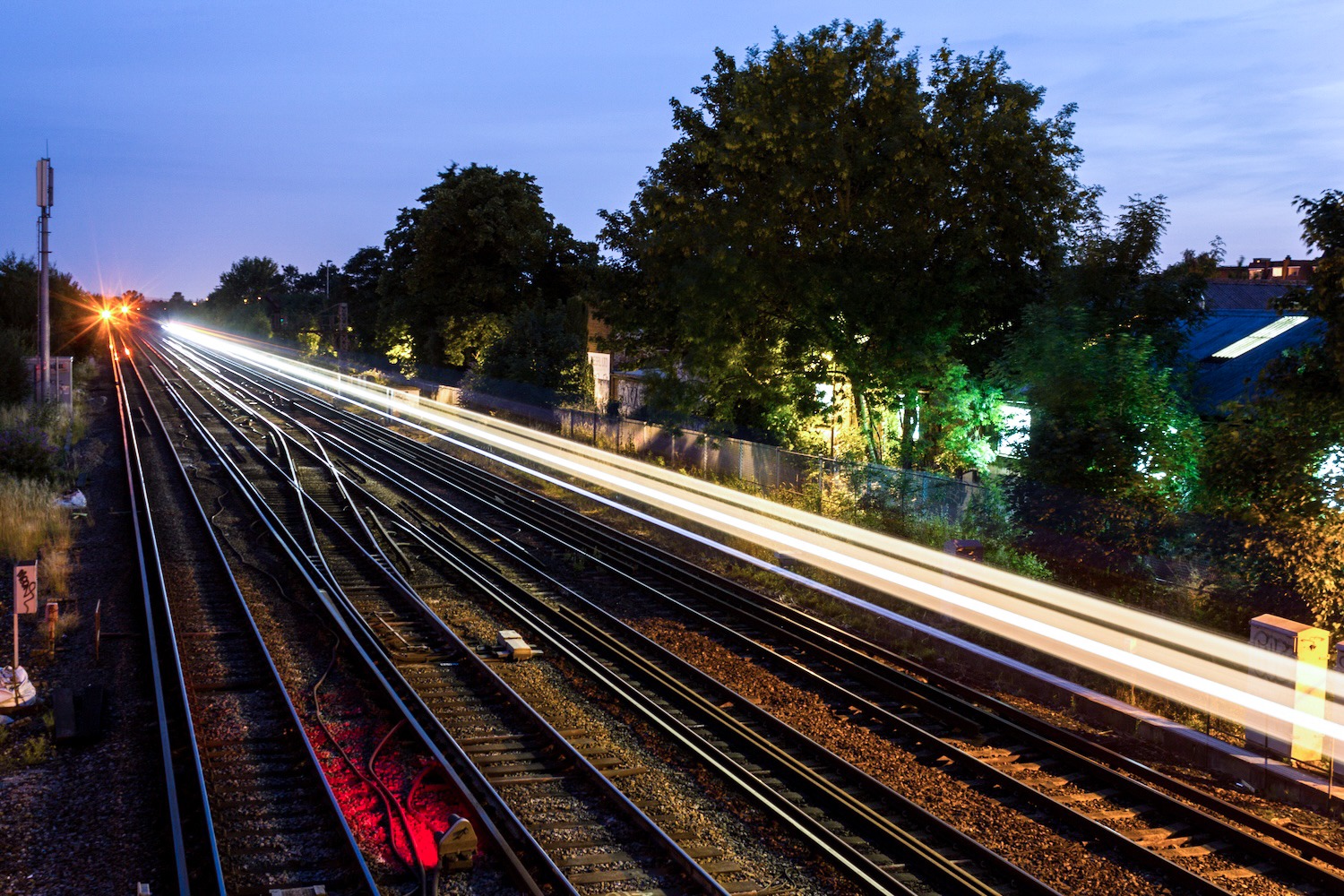
Leading lines
Use lines already in the scene to pull the eye towards your subject or through your frame.

Diagonals
Diagonal lines create energy in your scene, even when they might lead to nowhere in particular (unlike leading lines).

Framing
Shoot your main subject through something in the foreground to add depth.

Symmetry
Highly aesthetically pleasing to the eye. Line up on a central axis and let both halves mirror each other.

Negative space
Leaving the frame mostly empty gives your subject room to breathe.

Figure to ground
A subject only stands out if the background lets it. Put a light subject against a dark tone, or a sharp one against a soft one, and the eye finds it straight away.

Foreground interest
Put something of interest in the front of the frame close to the camera to build depth and distance in the scene.
It's worth noting that almost every decent photograph uses two or three of these compositional elements at once. For example, with image number 8 (gorse at Cornelian Bay), there is foreground interest, but that's also sitting on a third of the frame.
Want to keep this infographic handy?
Download our free PDF.


