


You don't need a pro's kit bag to make great pictures of buildings. Here are five easy tips for getting fantastic architectural shots with the kit you have
I'm not an architectural photographer, but I love buildings and photographing them. Concrete, glass, stairwells, car parks, the odd forgotten mural: if it's built, there's a good chance I've stopped to photograph it. That said, I don't own a tilt-shift lens or any of the other fancy equipment commercial architecture photographers use, and I don't plan to either.
I’m a big fan of brutalism, and one of my favourite buildings to photograph is the Genex Tower in Belgrade, Serbia. I first visited in October 2023, and when I got the chance to return to Belgrade this September, it was one of the first places on my list. It’s really great- the shape, the imposing nature of it all, and also too the crumbling nature of the building. Yes, it’s still in a sad state of disrepair, but it's clearly having a moment too. In 2023, I had the place to myself. This time, there were visitors everywhere. Whether that's progress or just another social media trend, I'm not sure, but it's good to see it getting the attention it deserves.
I shot both visits on Fujifilm mirrorless cameras: the first with my X-T30 II and XC15-45mm kit lens, the second with my upgraded X-T50 and FUJINON XF16-55mm F2.8 R LM WR II. I didn’t use any special lenses, tripods or anything like that. Just the kit I have for my regular everyday photography.
The Genex Tower: a quick history
Officially called the Western City Gate, the Genex Tower was designed by Mihajlo Mitrović for Generaleksport (Genex), once Yugoslavia's most powerful company. Built between 1971 and 1980, its two towers, one for offices and one for apartments, are joined by a two-storey bridge at the 26th floor. When it was completed, it was the tallest building in Yugoslavia.
Despite the legend, the round restaurant on top never revolved. It was a private dining room for Genex executives, and it closed after the company collapsed in the late 1990s. The office tower has stood almost empty for years, but in 2021 the building was officially declared a cultural monument.
Source: Spomenik Database
So, without further ado, here are my five tips. You don't need fancy kit or expensive lenses for any of them. All you really need is an openness to seeing buildings a little differently from what’s in front of you. Each of these works just as well with a kit lens or a phone as it does with a pro setup, and these tips will add your own eye and touch to your building images, too.
1 Photograph the building in its wider environment

It's tempting to walk straight up to a building and fill the frame with it. Before you do, step back and look at what is actually around it.
The Genex Tower sits beside a motorway, wrapped in advertising, with trees and tower blocks around it, and I wanted to incorporate some of that into one of my shots. I took this image from a footbridge over the road, with the graffiti-covered railing in the foreground.
I know it's not a tidy picture, but it tells you far more about the building and its environs than a clean shot of the façade would.
When doing similar shots, look for a bridge, a hill, a car park roof, or the far side of a road where you can see the building in its surroundings. Include the things around the building in the frame rather than cropping them out. They're what give it a sense of place, and don’t worry if that’s a bit messy too.
2 Look for lines and angles
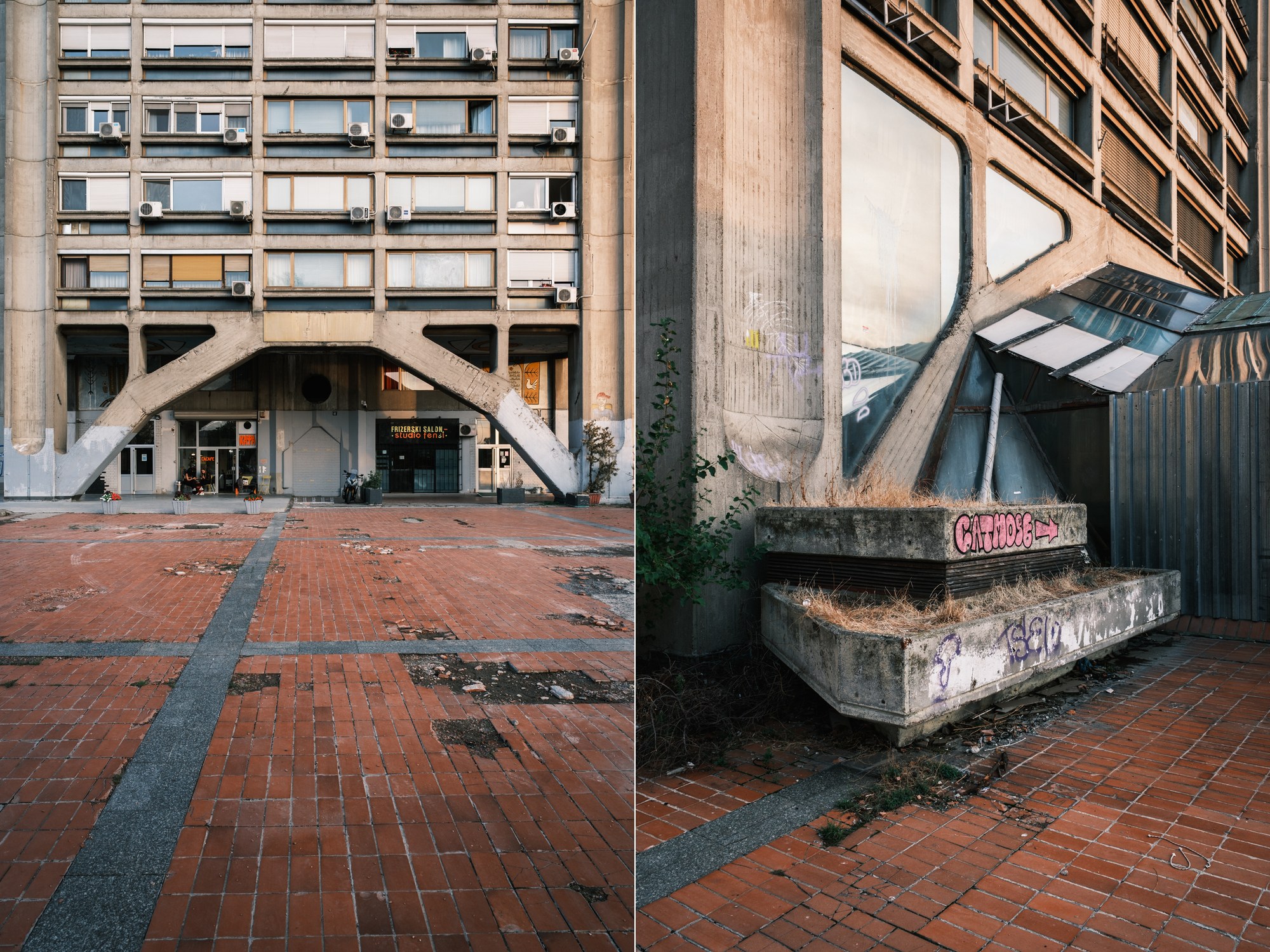
Buildings are made of lines, and the way you arrange them in the frame does most of the work. Look for symmetry, repetition and leading lines that pull the eye through the picture.
At the base of this residential tower, the huge V-shaped supports frame the shopfronts below, and the lines in the paving lead straight into them. I stood dead centre and kept the camera level so everything stayed square.
That's the one technical habit worth building: keep your verticals straight. When you tilt the camera up, vertical lines start to lean in towards each other. Professionals fix this with a tilt-shift lens, but you can get most of the way by keeping the camera level and stepping back, then correcting small leans in Lightroom's Transform panel or your phone's crop tool.
Or go the other way and commit. My low diagonal shot ignores straight lines completely. The trick is to tilt far enough that it looks deliberate, not accidental.
3 Look up

This sounds obvious, but most people walk past buildings with their eyes at street level.
Standing right between the two towers and pointing the camera straight up gives you one of the most striking views of the Genex Tower. The two concrete columns run towards each other, the bridge and restaurant hang in the sky between them, and the rows of round windows repeat into the distance. Centre it carefully and the symmetry does the rest.

Looking up also turns up things you'd never see otherwise. Under one of the canopies, Serbian folk artist Lazar Vujaklija painted a mural of birds, suns, and moons in 1979. According to the Spomenik Database, it was Belgrade's first public mural. Lots of people must walk under it every day without noticing.
4 Get close
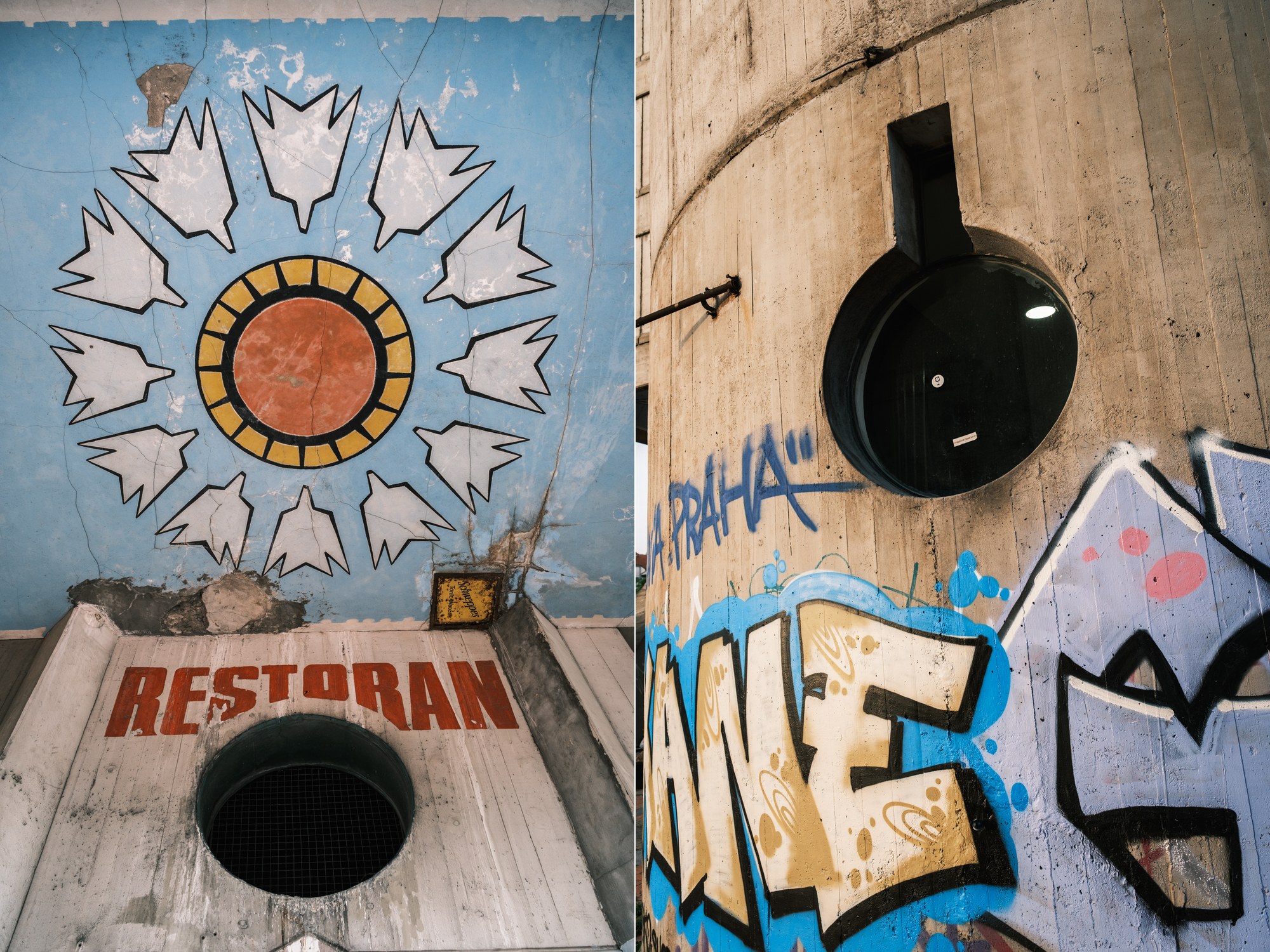
Once you've photographed the whole building, start photographing its details. Details don't need a wide lens either, and they often say more about a place than the big view does.
My favourite is this sunburst painted above an old "RESTORAN" sign, with a round vent below, all cracked and peeling. The porthole windows are just as good: the curved concrete still carries the grain of the wooden boards it was poured against, which is one of the things I love most about brutalist buildings.
Honestly, one thing I do regret not doing is just getting in closer - I do that with other subjects like lighthouses, etc. Next time I'll fill the frame with textures: the window brackets and the weathering on the concrete. Don't make my mistake: when you think you're close enough, take another step forward.
5 Shoot the forgotten elements
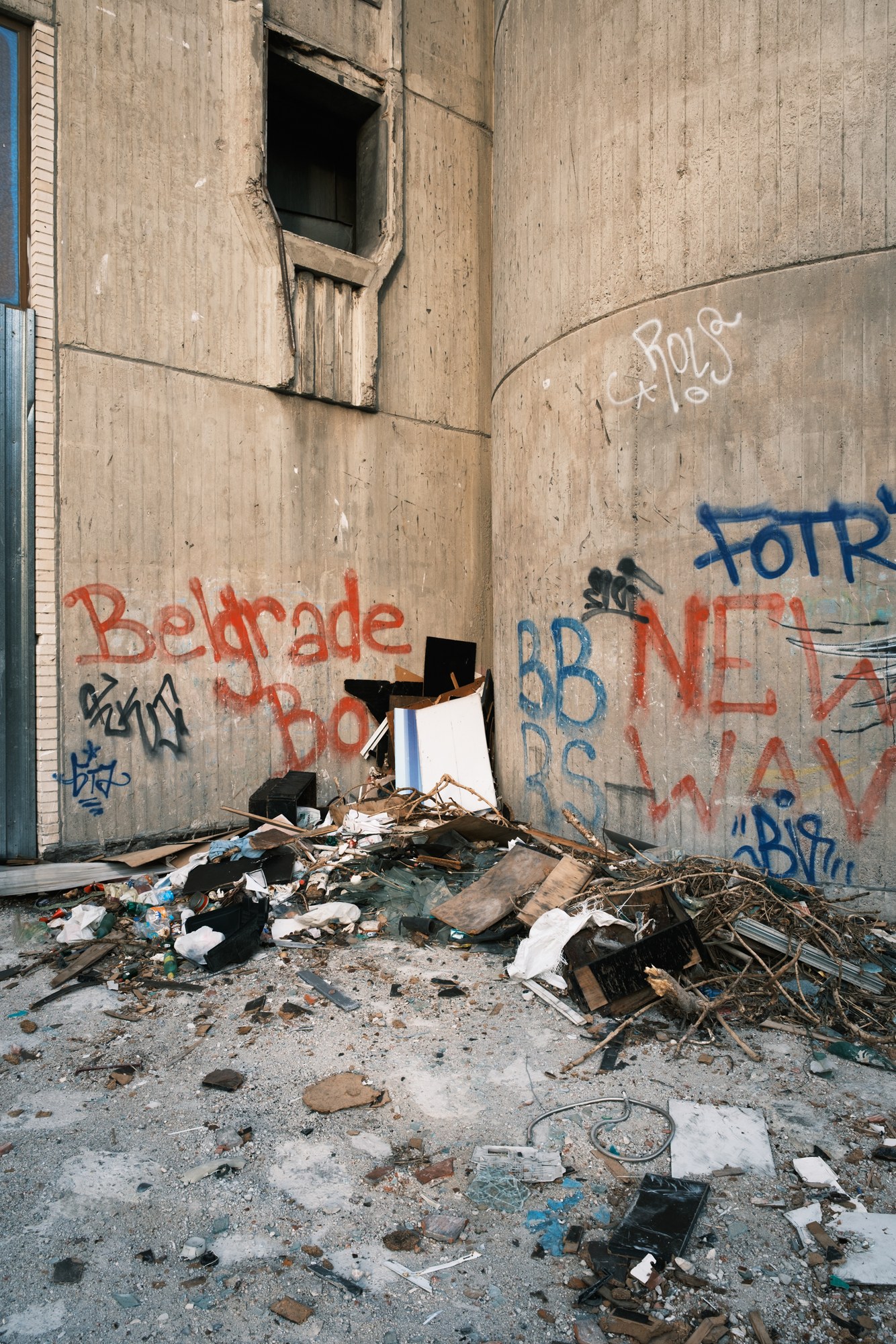
Architectural photographers are usually working to a brief. You aren't, which means you're free to photograph the bits no one else bothers with.
Round the back of the Genex Tower, I found a corner piled with rubbish beneath "Belgrade" sprayed in red, and a concrete stairwell covered in tags. They're not the shots you'd put on a postcard, but they say a lot about what the building is now: loved, but also neglected and still very much part of the city.
So photograph the car park, the bins, the back door, the 1970s shopping precinct and the petrol station at dusk. Some of my favourite building photographs are of places most people never look at twice.


Final thoughts: Just get out there and see what you end up with
You don't need special lenses to make better photographs of buildings. You just need to slow down, step back, look up, get close and wander around to find the hidden details.
If you love buildings, as I do with that Genex Tower, you should embrace that, get out there, take some brilliant pics and tell everyone about it; share them on your socials, in your Picfair Store!


