


Moving from smartphone photography to your first camera is a big step, but a fantastic one. Here's why it's worth taking the plunge, along with two fantastic starter cameras from our friends at Fujifilm
Taking the Step Up from Smartphone to Your First Camera
Making the jump from smartphone photos to owning your first camera is a big step, but a great one for your photography journey. If you've been thinking about taking the plunge but aren't quite sure where to start, or which camera to choose, this guide is for you.
Read on for why the upgrade is so worthwhile, along with two brilliant first camera suggestions from our friends at Fujifilm, and why the brand is such a great choice for beginners.
First, Why Upgrade from A Smartphone to A Camera?
You might be thinking, "My phone already has a great camera, it fits in my pocket, and it's with me all the time, so why would I need anything else?" That’s all very true. But there are several good reasons to invest in a dedicated camera, and once you start thinking about them more, the case quickly makes itself.
First, above all, it marks the moment you start taking your hobby seriously, and with that, all the rewards that come with it: more focus, more enjoyment, and inevitably, you’ll take much better pictures along the way. It's true what they say: the more you invest in a hobby, the more you get out of it, and that's exactly the case here.
One of the best things about having a camera in your hand, too, is that it takes you away from all the distractions that come with your phone; no interruptions with notifications or messages, no temptation to doomscroll on social media, it’s just about you and composing the scene in front of you, allowing you to really be in the moment.
1 The image quality is in another league
Even with all the advances in smartphone technology, a phone still can't quite match a dedicated camera for image quality. I say this as someone who has owned plenty of cameras and smartphones over the years, and while I enjoy shooting on phones, I haven't found one that rivals a proper camera.
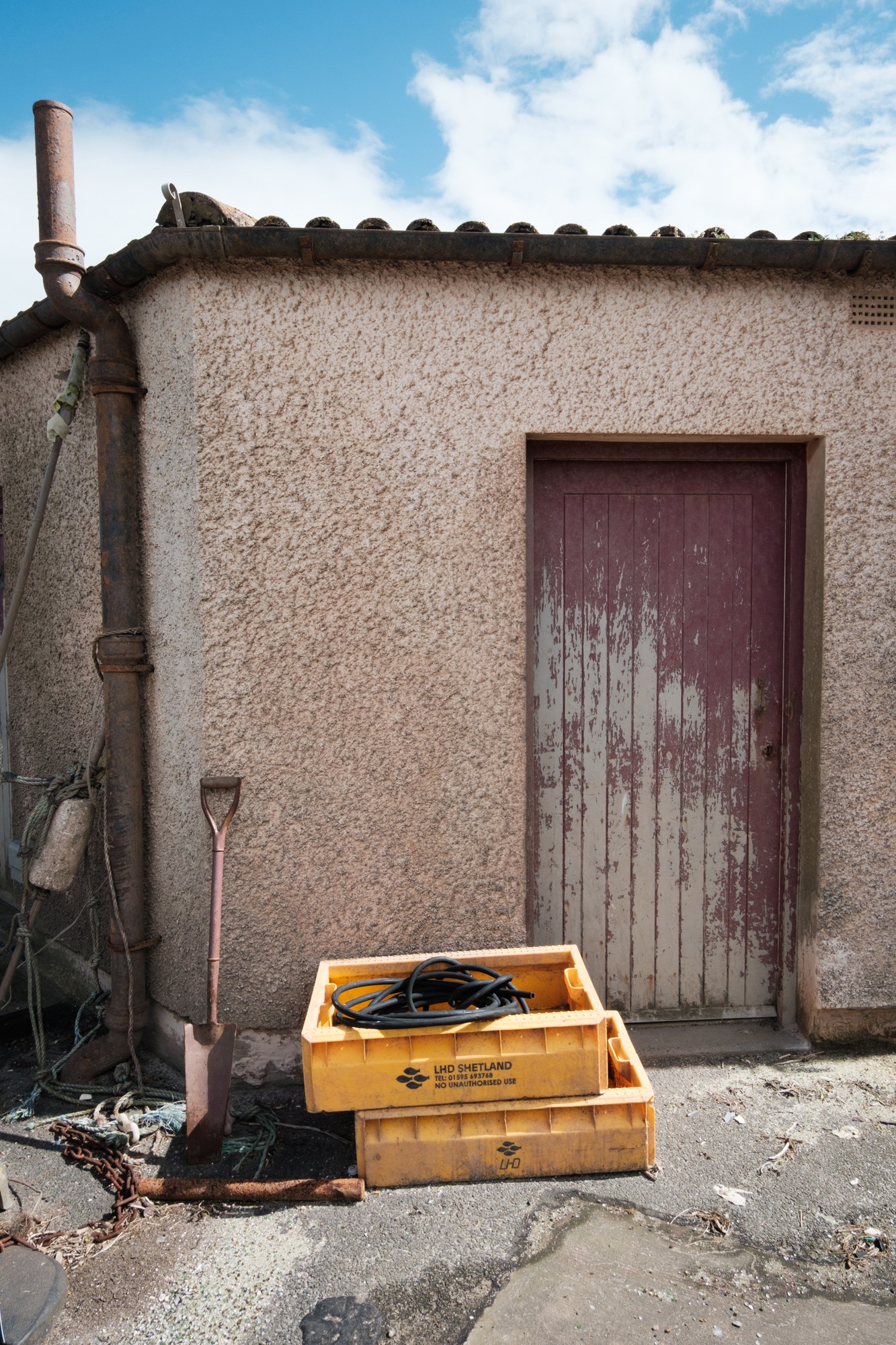
Even with newer features like shooting in RAW, smartphones aren't quite there yet. Much of that comes down to hardware. A camera's sensor is several times larger than a typical smartphone's, so it gathers far more light. A phone makes up the difference with heavy software processing: boosting colour, sharpening edges and smoothing textures. It looks punchy at first glance, but it can feel artificial, and you'll see it in the comparison below. The camera's version is more natural and true to life, with subtler tones and colours that look like the scene actually did.
It's not all about megapixels either. Many smartphones now match, or even beat, cameras on megapixel count, but that doesn't guarantee better images. More often it just means larger files, without the quality a bigger sensor delivers.
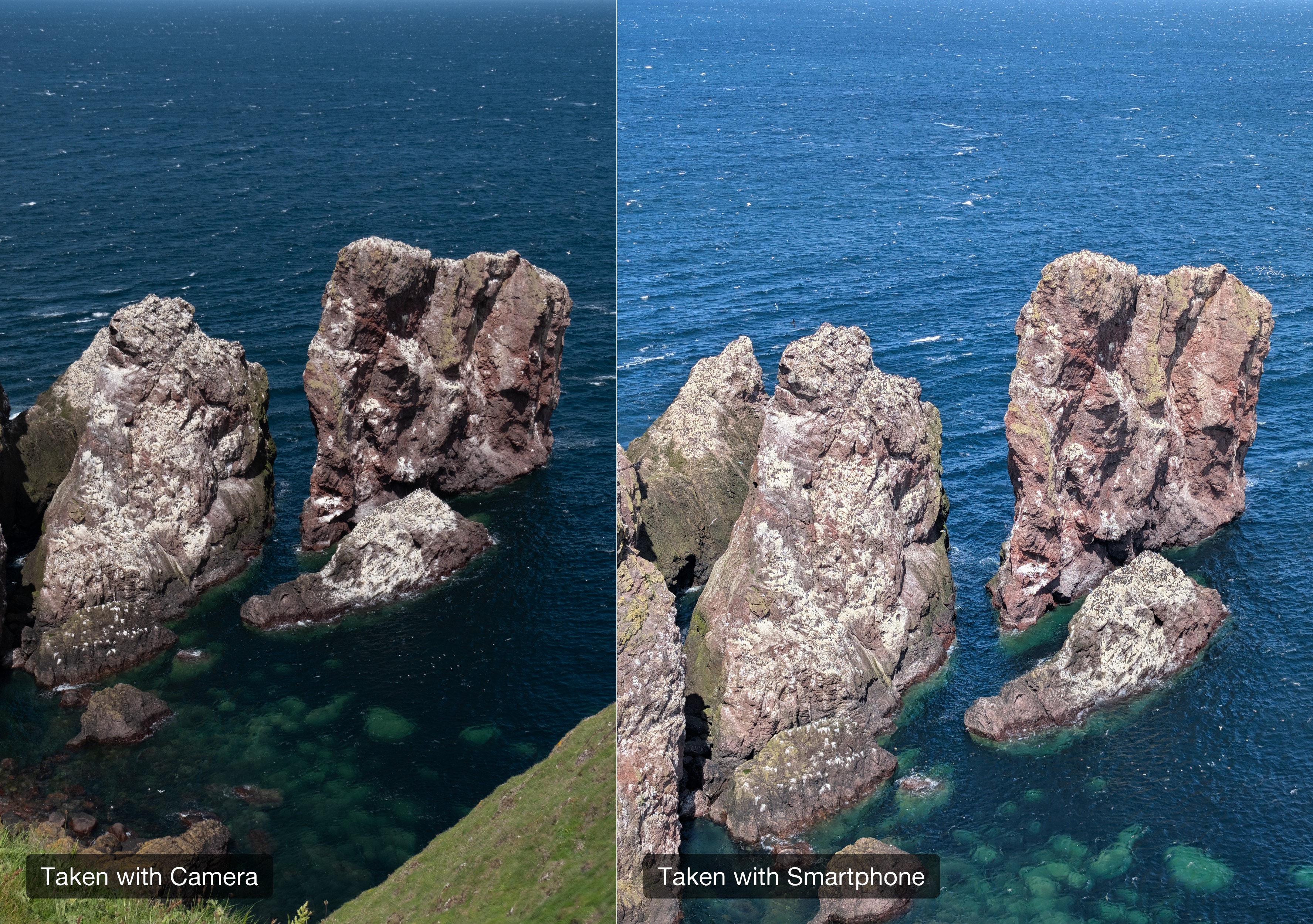
Camera: Fujifilm X-T30 III / XC 13-33mm f/3.5-6.3 OIS / 29.9mm (45mm equivalent) / f/11 / 1/320s / ISO 200 / St Abbs Head, Scottish Borders
2 There's nothing like a camera in your hand, and they look great on you too
Beyond image quality, there's the physicality. Cameras have a lovely tactile nature, and nothing feels quite like one in your hand; a smartphone simply isn't the same. When you pick up your camera, clicking the shutter and taking pictures is its sole purpose. No social media notifications, no messages, no distractions. Just you and what’s in front of you in the frame.
There’s something to be said about the tactile nature of cameras too: using physical dials to get the settings right for your shot, pressing down on a physical shutter; it means you really slow down with composing the scene in front of you and makes every frame feel so much more intentional, and that’s what owning your first camera is all about.
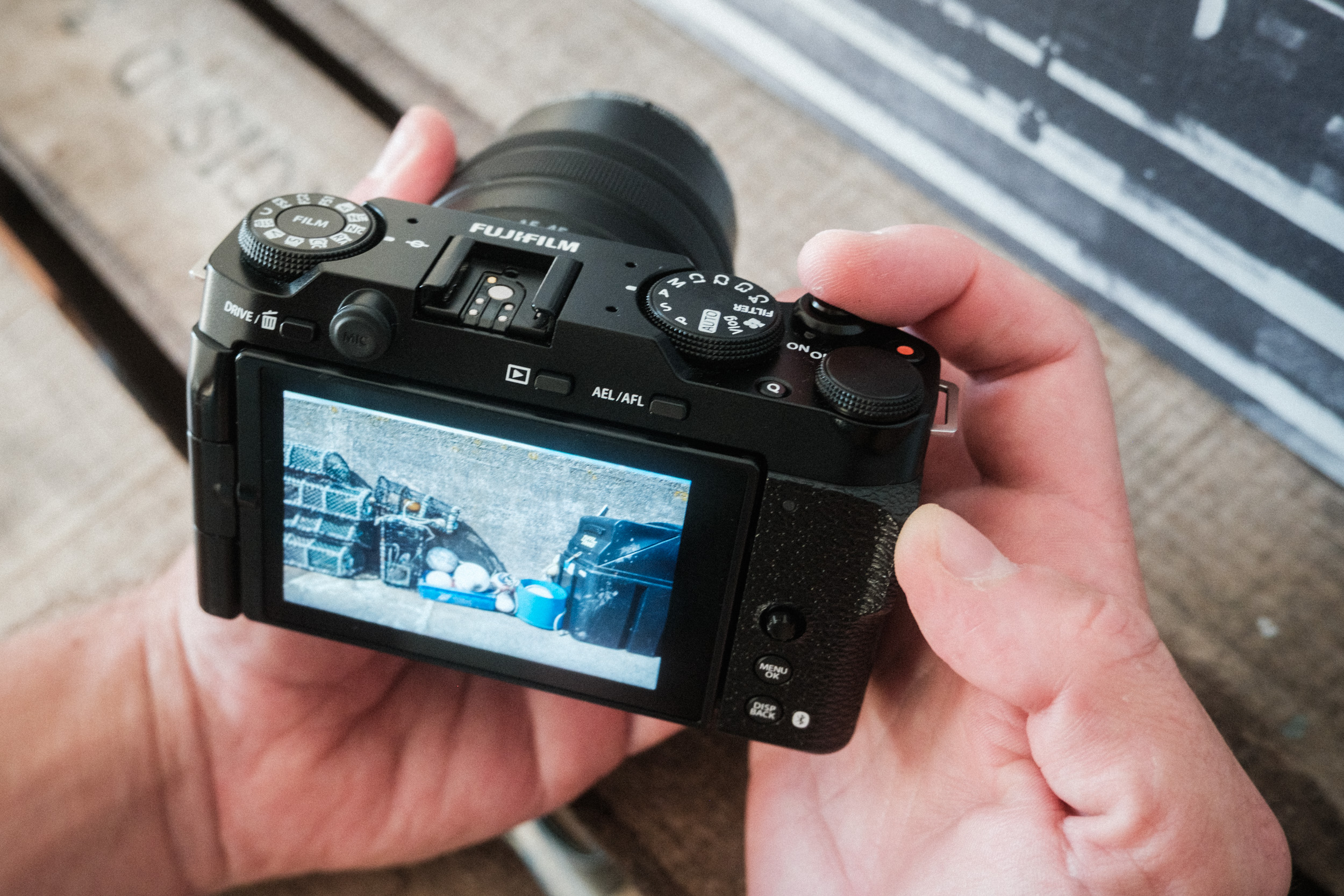
Let's be honest, cameras look good on you, too; and a camera quickly becomes part of how you express yourself as a photographer and is reflective of your overall style, regardless of how you wear it, whether that’s one slung around your neck while you're out walking the streets, or even paired with a strap and bag that suits your outfit. Don’t think it doesn’t go unnoticed!
For me, both of these points were a big part of what drew me to Fujifilm for my first mirrorless camera, the X-T20, back in 2020. Not only did it look great, but it was a pleasure to handle, and it never felt too big, heavy, or cumbersome. More on that later.
3 A camera forces you to slow down and really be intentional with your photography
With a camera too, it forces you to really slow down and be in the moment; there are dials you need to turn, buttons and focus choices you need to think about; it’s full of intentional decisions that you need to make when taking an image, which is a really fantastic way to take images and hone your craft.
4 You're buying into an ecosystem, not just a camera
When you buy a camera, you're investing in far more than just that single model. Depending on the camera you choose, it opens you up to a whole world of lenses, filters, software, accessories, and even entirely new communities of photographers. Cameras let you get creative, make connections and produce amazing images you might have never thought possible, in ways a smartphone simply cannot do.
Consider what you want to shoot before deciding on a camera:
It’s always worth spending time before buying your first camera to think about exactly what you want to shoot, as this will influence what type of camera you ultimately buy.
You don’t need to know the answer immediately, and wanting to photograph a little bit of everything is a perfectly valid choice. But for example, if you know that being in the great outdoors with your camera is what you see yourself doing, you might want to consider a camera that is ideally suited towards that, or if you want something for street scenes, candid shots, family photos, etc., you might want a camera model designed exactly for those purposes.
So keep that in mind: what are you ideally looking to photograph? Let that guide you with your decision, and keep reading for our pick of two fantastic first-time cameras.
Why Go With the Fujifilm Ecosystem?
I can write from honest experience on this one. I've been a Fujifilm user for many years, but I really took the leap into the brand's ecosystem when I bought that X-T20, and I've never looked back.
I've already mentioned what first drew me in: it was the gorgeous look of both the camera itself and the images it produced, and how it felt in the hand.
Many Fujifilm models, particularly the X series, nod back to the analogue era in their handling, look and style, without losing any of the modern features you'd expect. Like many photographers, this is exactly what I wanted from a digital camera, and Fujifilm gets this bit right,
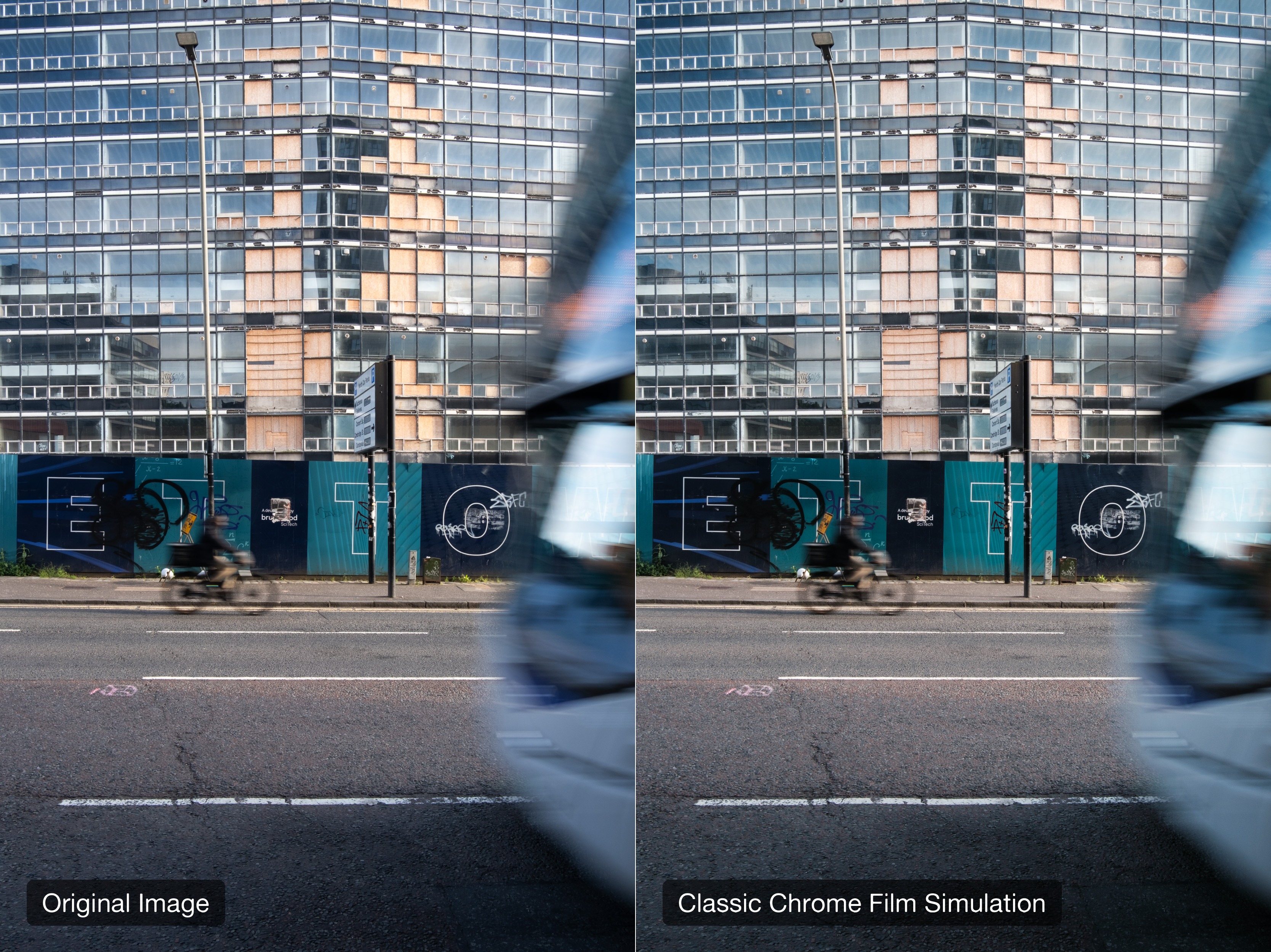
But the biggest selling point for me, personally, was Fujifilm's Film Simulations. These are built-in styles, unique to Fujifilm and modelled on the company's classic analogue film stocks, that you can apply in-camera or in post-production to give your images a film-like look. Honestly, they make your pictures look absolutely stunning, and they were a big part of what drew me to the brand on a personal level.
Every photographer's needs are different, but Fujifilm's image quality is hard to beat; there's a magic to it that I've never found anywhere else. Film Simulations are one of the biggest reasons I shoot Fujifilm, and if you'd like to go deeper on one in particular, read my article on the Classic Negative Film Simulation.
Here's an example of another favourite of mine, Classic Chrome:
And to my earlier point about buying into a system: with Fujifilm, you're getting far more than a camera body. You get access to Fujifilm's entire lens range, which is beautifully made, optically spectacular, and built to last so that you won't be replacing your glass forever either.
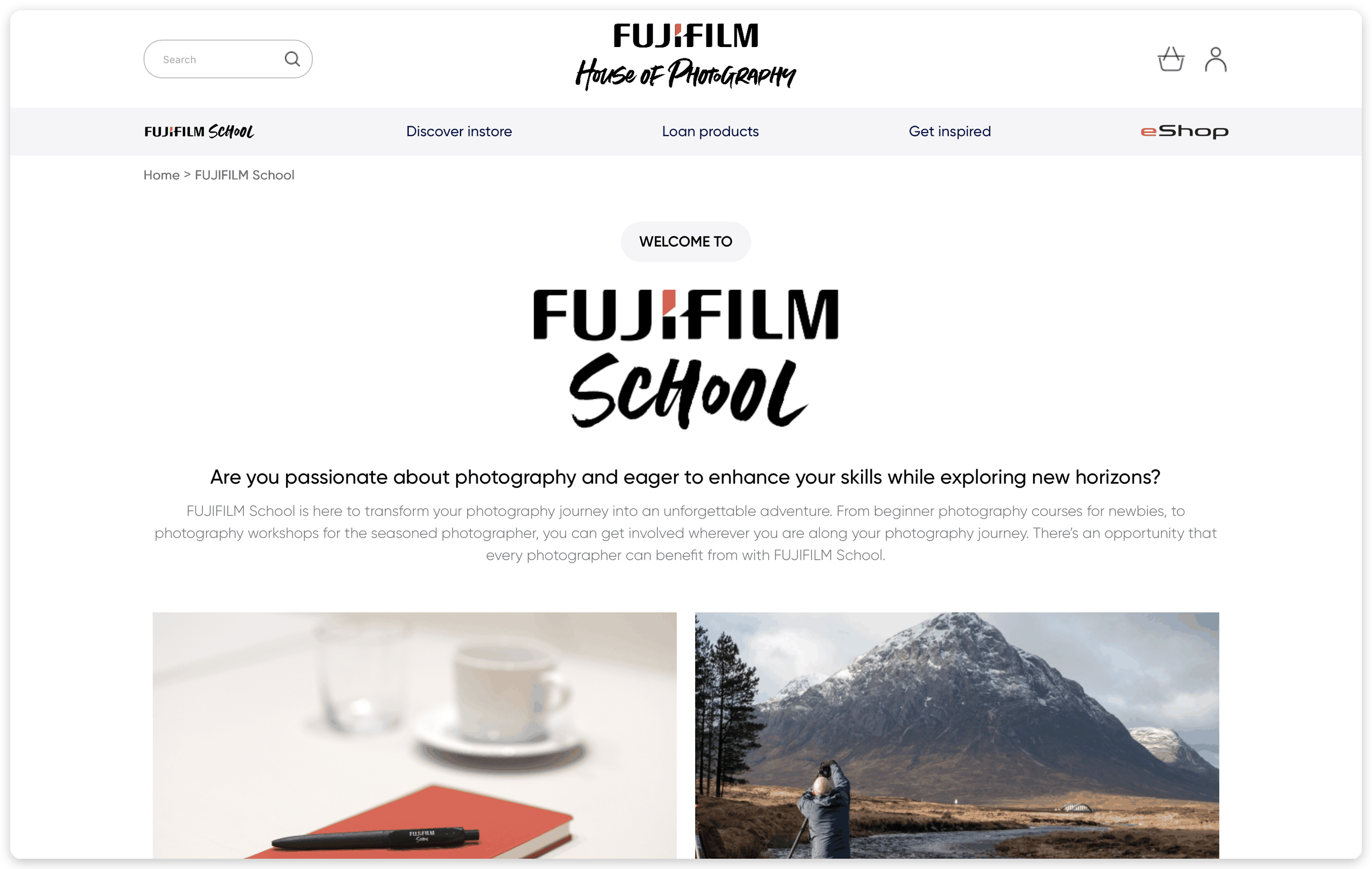
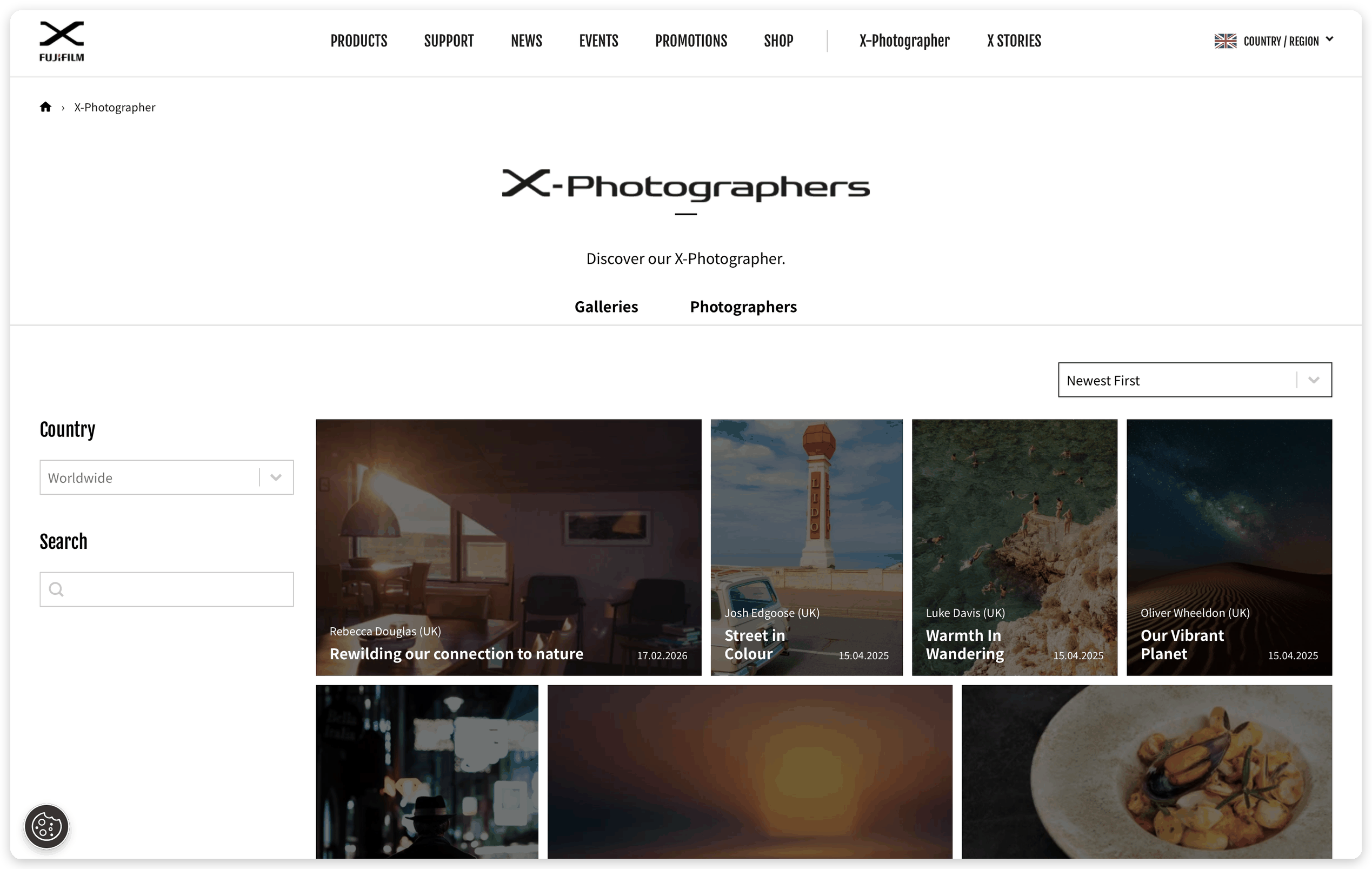
It goes beyond the kit, too. There's a thriving community of X-series photographers to connect with, both online and in person, and FUJIFILM School, where you can take courses with experienced pros to hone your skills and get the most from your camera.
To sum up why Fujifilm is such a great choice for your first camera: the cameras look and feel gorgeous, they're built to last, they produce some of the most beautiful images I've seen from any camera system, and they open you up to so much more, from lenses to community to education.
So, let's get on to the two cameras that could make a brilliant first camera for you.
Two Brilliant First Camera Suggestions from Fujifilm
Below you’ll see an overview of two fantastic contenders for your first camera from our friends at Fujifilm: the X-T30 III and the X-M5.
Both are mirrorless cameras, much smaller than traditional digital SLRs, and feature the same 26.1MP sensor, so you get the same superior image quality. They also both offer interchangeable lenses. But a few key differences could benefit you, depending on how and what you shoot.
Below, alongside the key features for each camera, you'll find sample images from my own test drives with both models: the X-T30 III out at the headland of St Abbs Head National Nature Reserve, and the X-M5 down in the working fishing village of St Abbs itself, both in the Scottish Borders (which, by the way, I’d highly recommend; it’s a spectacular area for photography).
Fujifilm X-T30 III: The Classic All-Rounder
£829 body only, £999 with the XC 13-33mm f/3.5-6.3 OIS kit lens
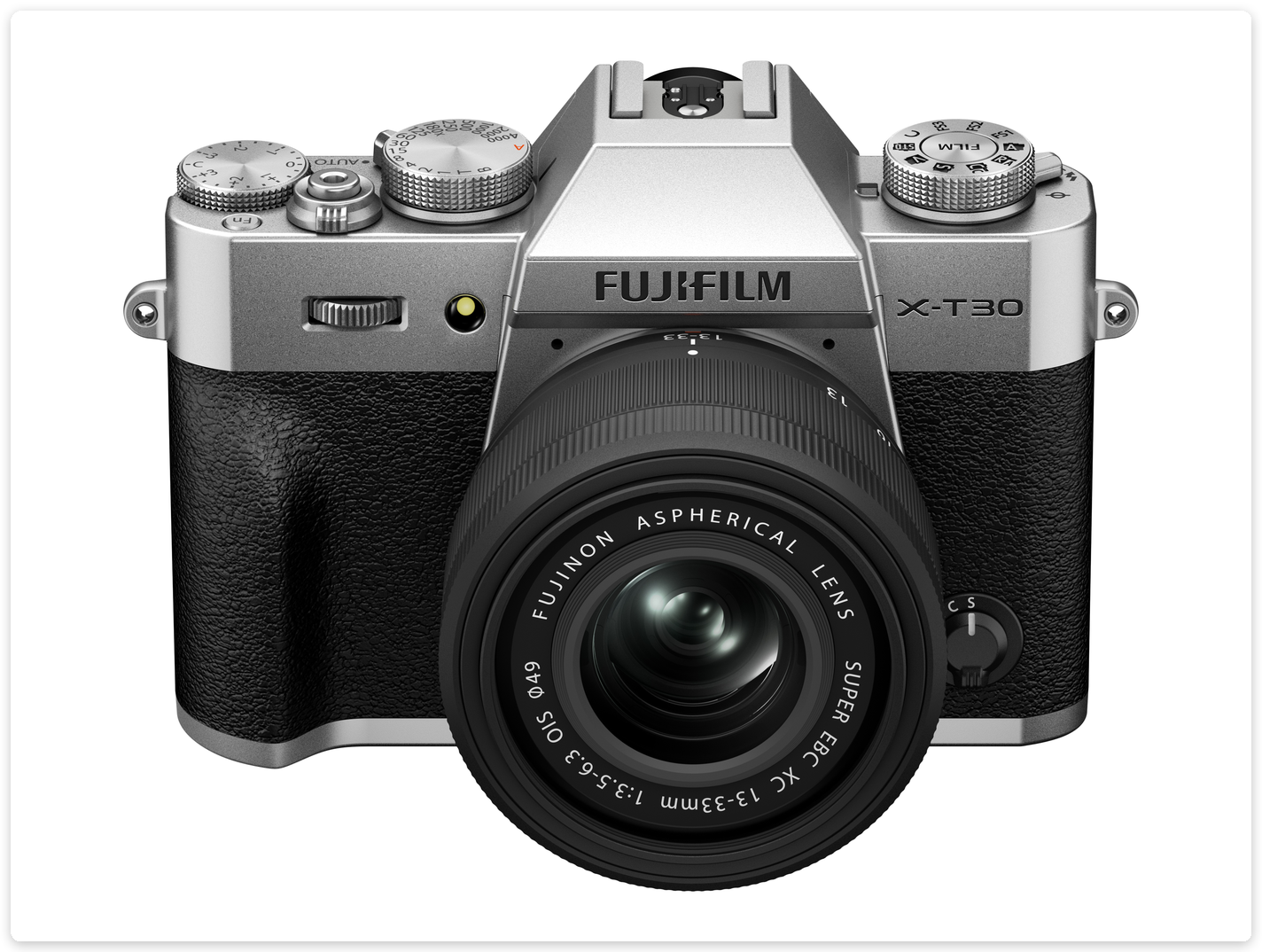
A brief overview: What you need to know about the X-T30 III
The X-T30 III features a 26.1MP sensor, giving you high-resolution images that will bring out all the details in your landscape, portrait, macro work, or any genre you specialise in. The high-resolution sensor also produces images suitable for printing at a range of sizes, from small handheld prints to larger than A2. It also features the latest AI subject-detection autofocus, which quickly and accurately locks on to your subject, making it a capable companion for people, wildlife, and fast-moving subjects, with sharp results each time.
The image reproduction with the kit lens is beautiful, and I loved handling the camera like an older film SLR, a design that the X-T30 III takes its cues from. It's available in three colours that nod back to the old SLRs too: Black, Silver and Charcoal Silver. What also surprised me was just how light it is at 378g; it’s the smallest and lightest in the X-T series. If you like the look and feel of an analogue SLR camera but want all the digital capability and performance to match, you'll love the X-T30 III.
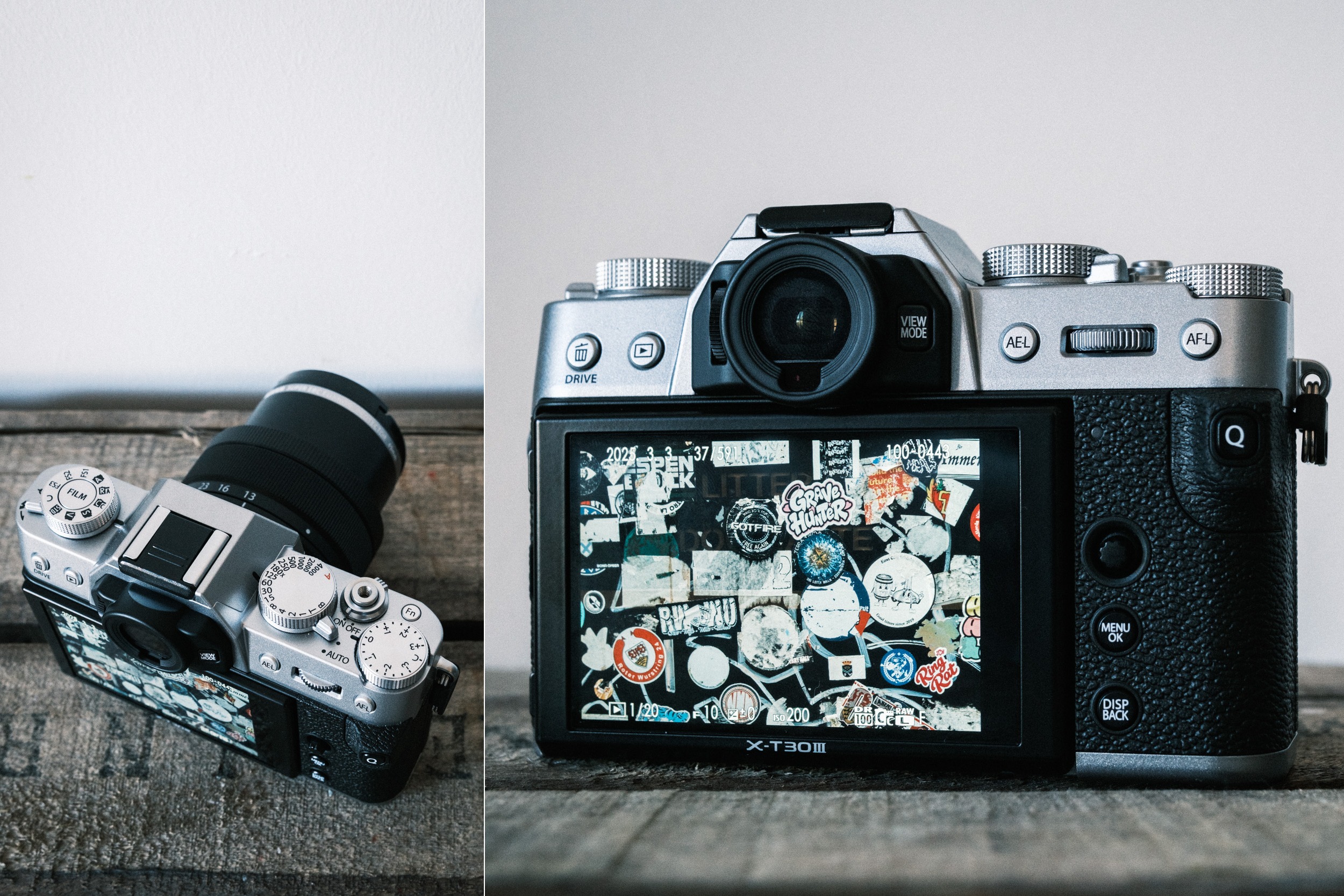
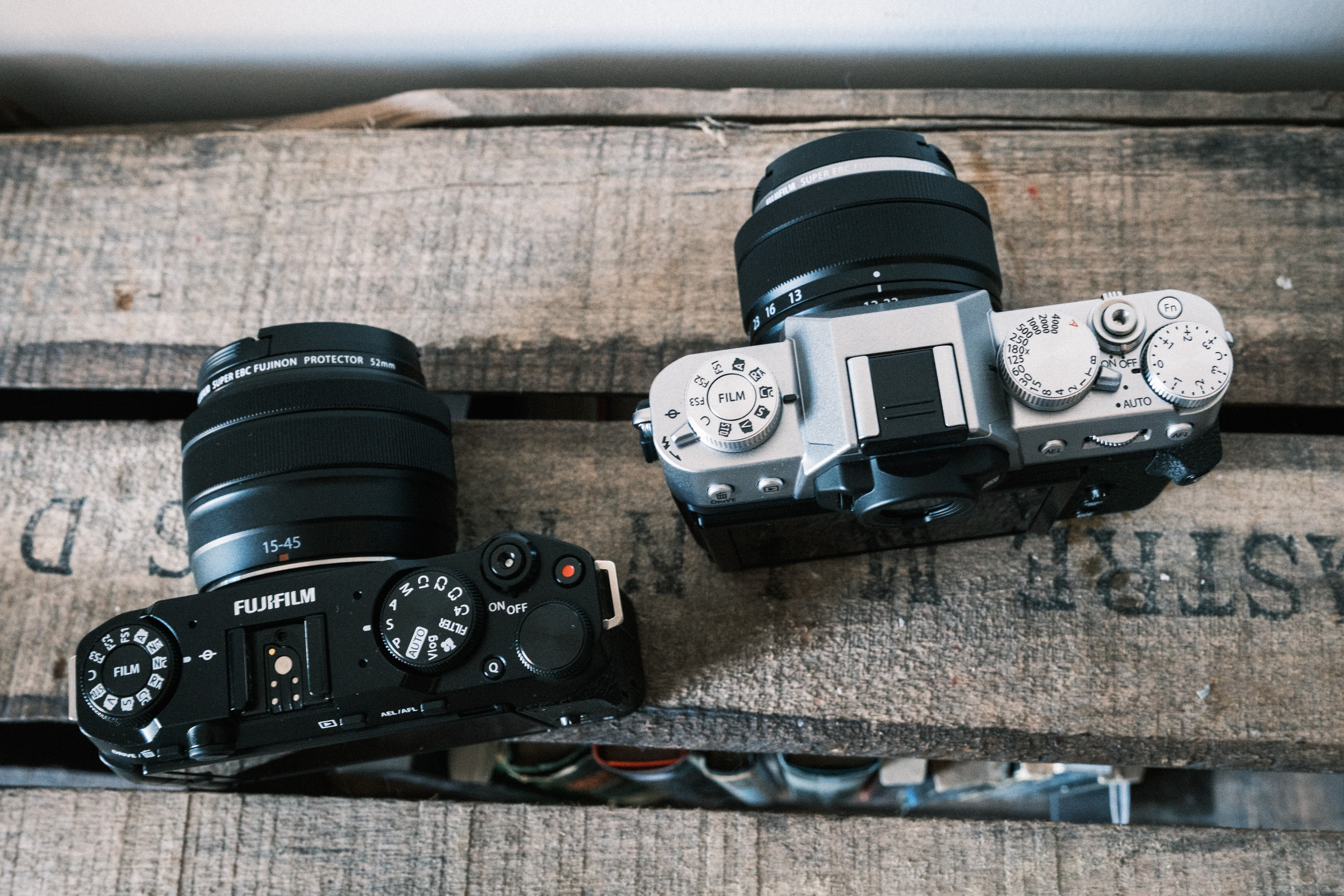
On top of the camera body, you'll find the same shutter speed dial you'd see on an analogue SLR, plus a dial for Film Simulations, so you can shoot JPEGs in your chosen film look in-camera, with no post-processing needed.
For a full breakdown, see the dedicated X-T30 III page on the Fujifilm website, where you can read about the X-T30 III's features and capabilities, as well as the versatile XC13-33mm kit lens available with the camera.
Fujifilm X-T30 III Sample Images
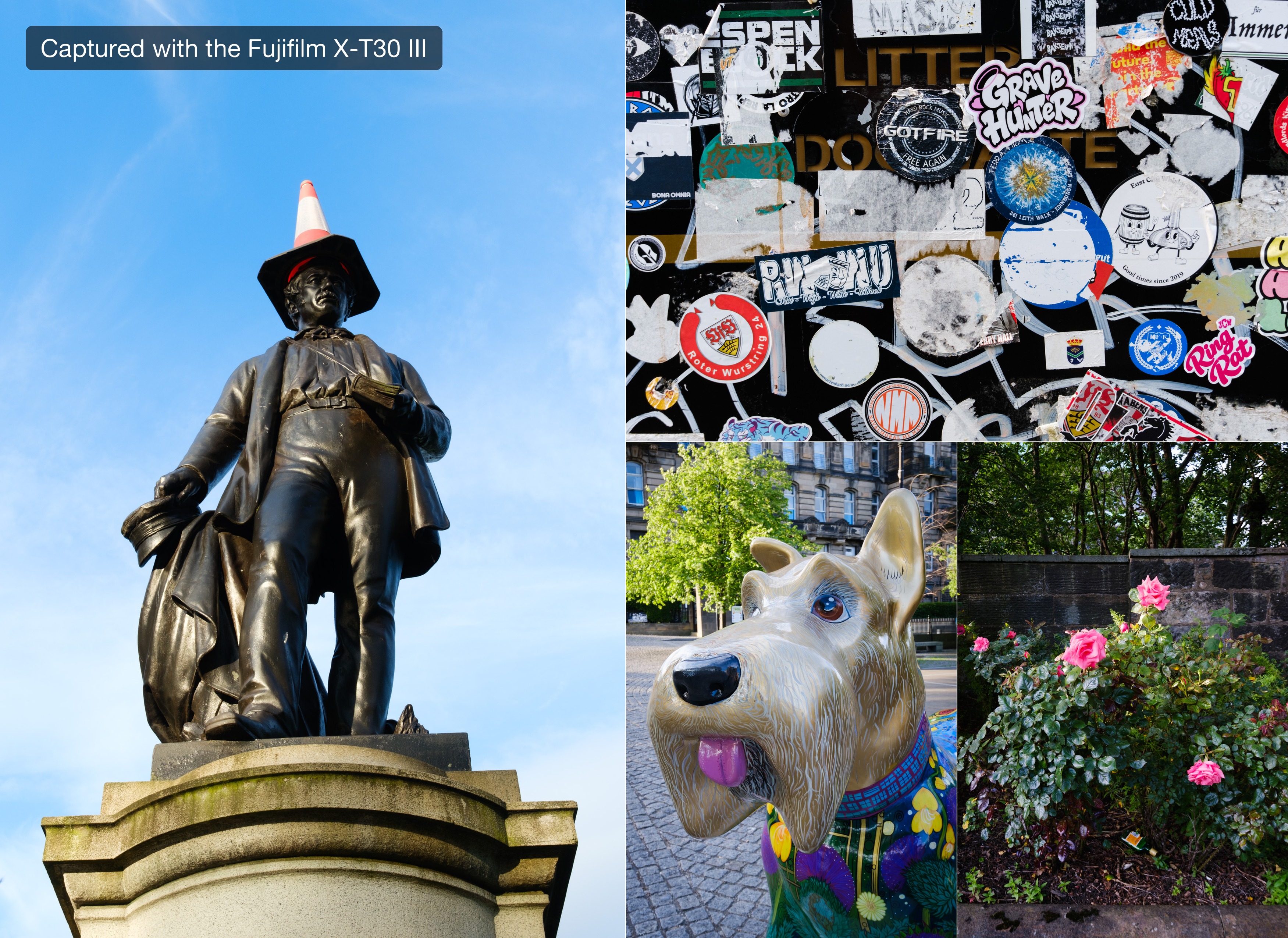
Below are a few sample images from my test drive with the X-T30 III, taken at St Abbs Head National Nature Reserve in Scotland. The viewfinder was super helpful in the bright coastal light, and the wide end of the kit zoom proved brilliant for the vistas. All in all, it was a pleasure to use for these seascapes (and it held up well in very breezy conditions)!
I processed the shots with Fujifilm's ASTIA Film Simulation, which is one of my go-to film simulations for outdoor shots. With soft tones lifted by vivid blues and greens, it works beautifully.





Fujifilm X-M5: The Compact Everyday Companion
Around £899 in a kit with the XC 15-45mm f/3.5-5.6 OIS PZ
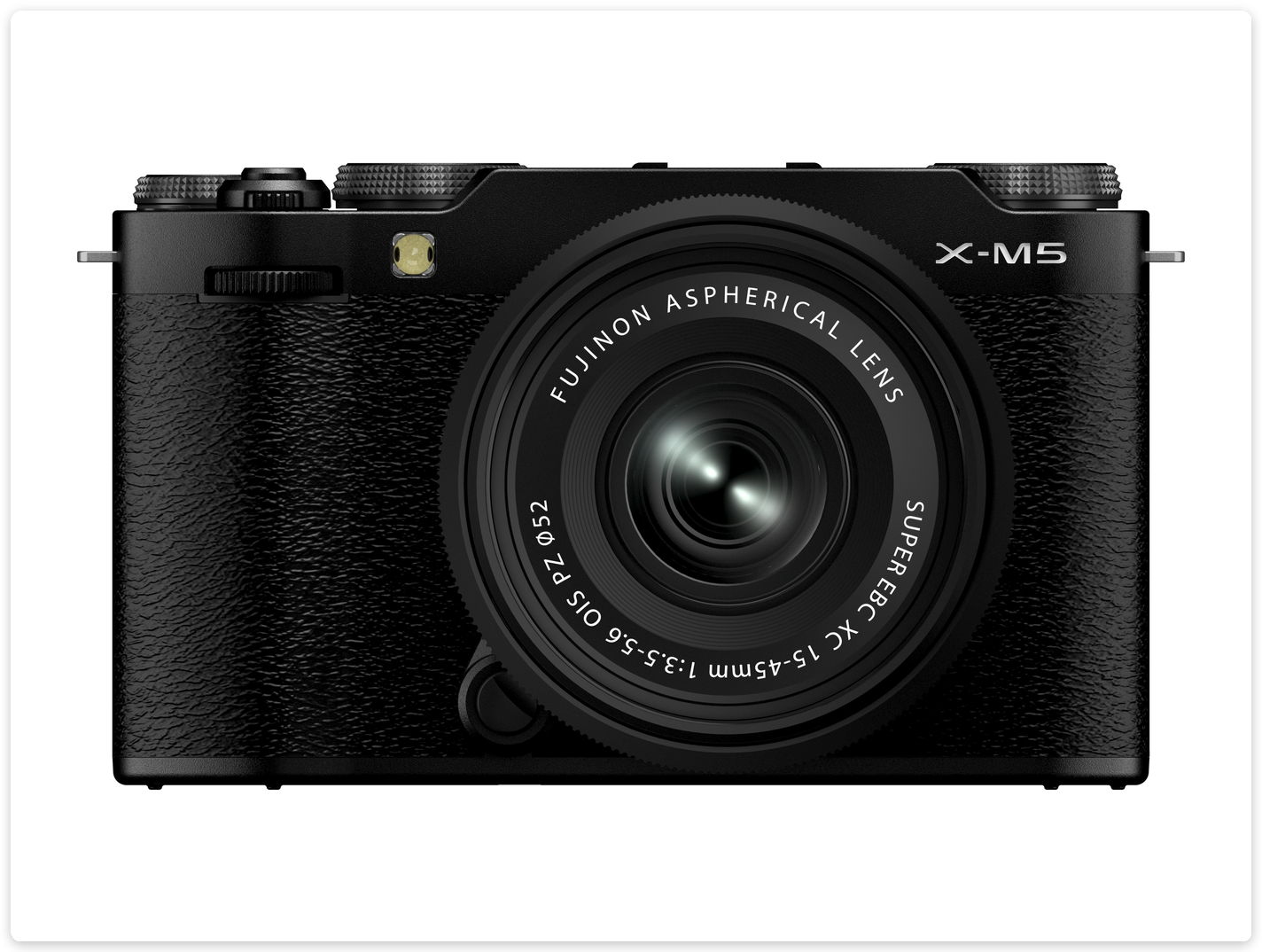
A brief overview: What you need to know about the X-M5
This is the smaller, lighter option compared to the X-T30 III, and the first thing I'd say about it is that if you're used to composing your images on your smartphone, the screen-only setup will feel right at home. The LCD flips and rotates, so no matter how you're holding the camera or which way you're shooting, you've got a large, bright screen to compose your shots with.
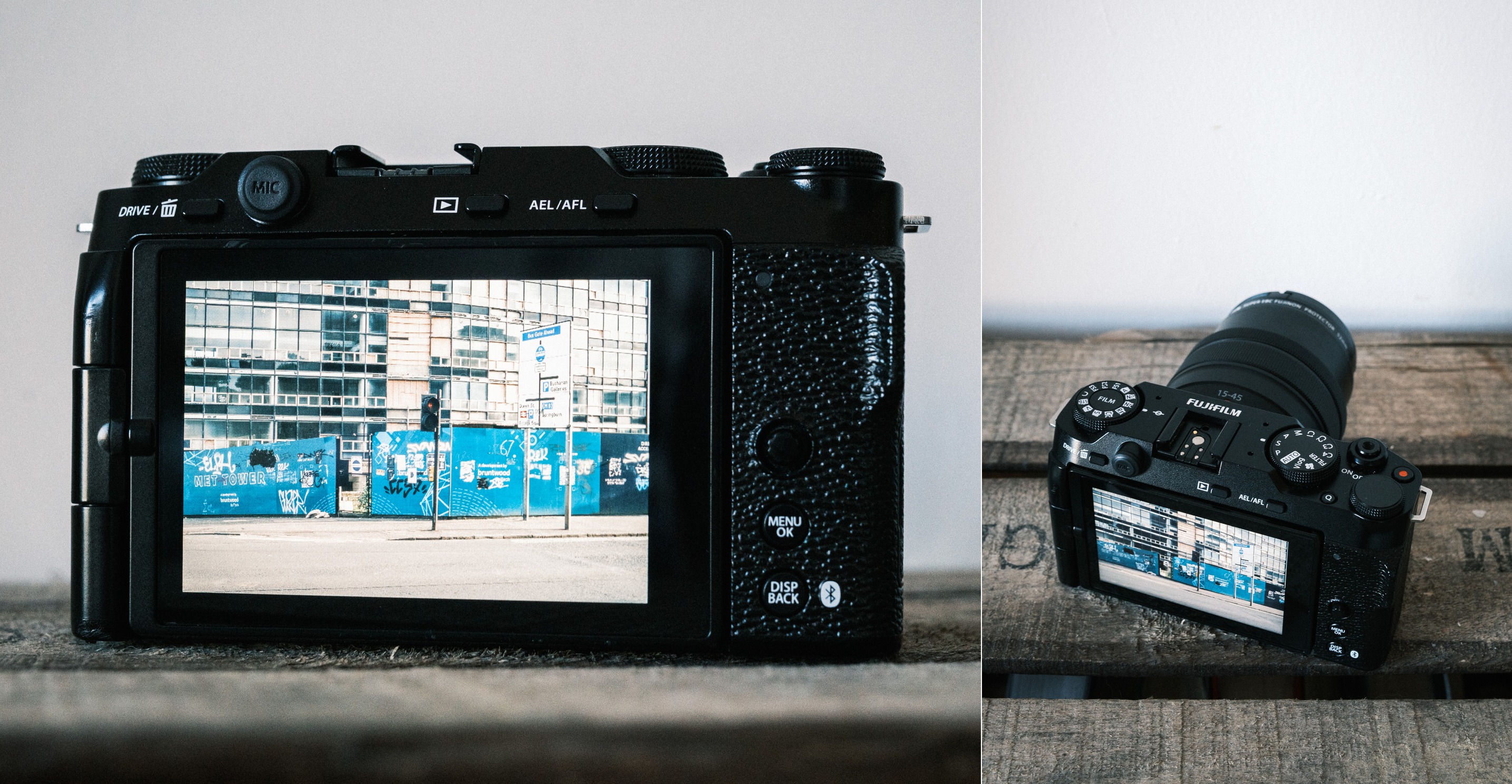
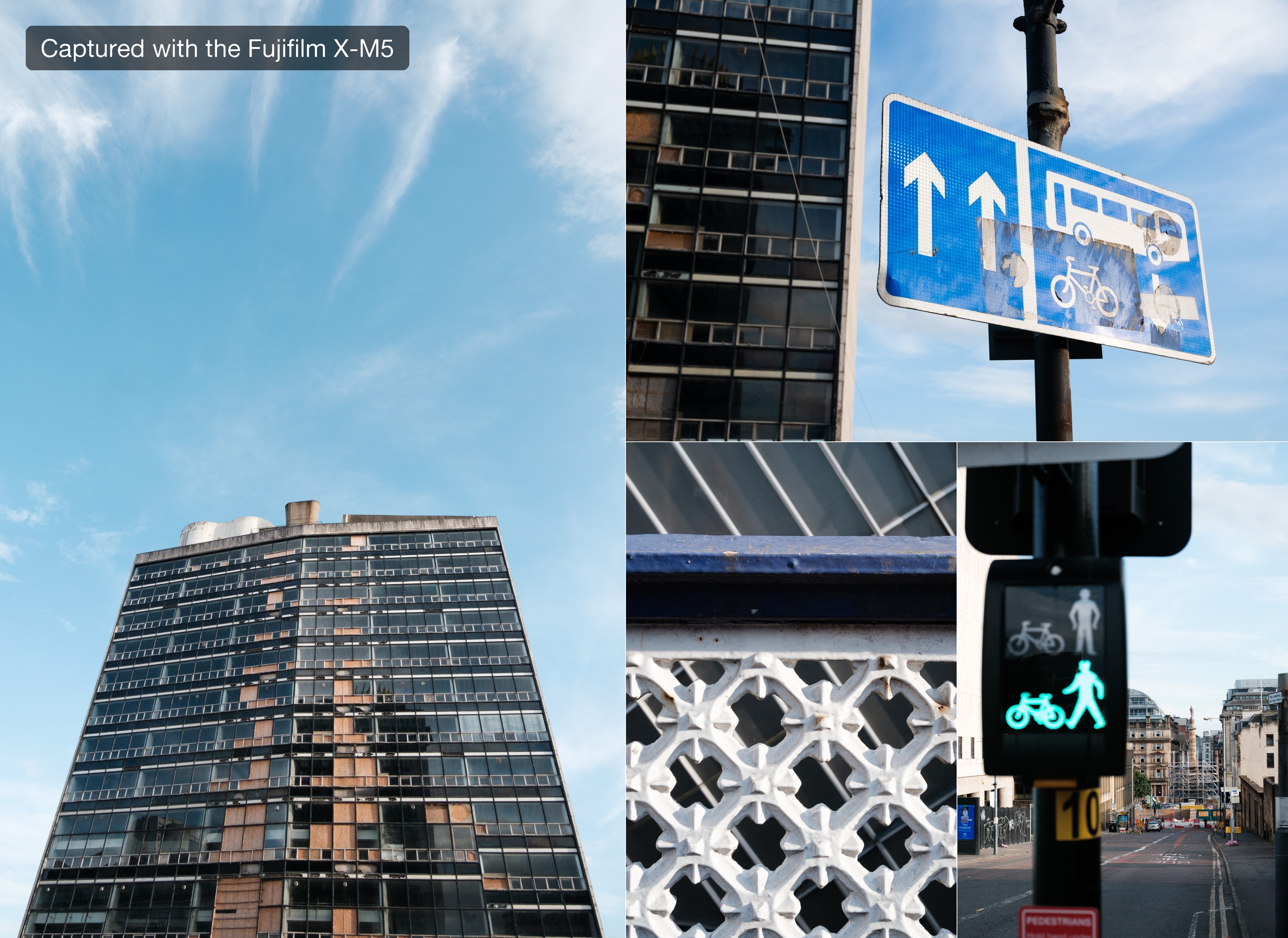
Another huge advantage is just how discreet the X-M5 is. For the sample images below in St Abbs Village, a busy, working fishing harbour, I felt completely comfortable taking pictures around the quayside without the camera drawing attention. Thanks to its compact size, it's an ideal companion for street, environmental, and travel photography, and it’s easy to carry or slip into your bag, ready to pull out at any time.
It's also worth noting that, while I'm focusing on photography in this article, the X-M5 is just as well-suited to video and vlogging. So if all-round content creation, for publishing on social media, for example, is your thing, this is a great solution for capturing both stills and footage at genuinely superior quality. It uses the same 26.1MP sensor as the X-T30 III, so you can expect detailed, versatile images (and video); the samples below show what I mean. For a full technical breakdown of the X-M5's features and capabilities, see the dedicated X-M5 page on the Fujifilm website and the accompanying XC15-45mm kit lens that comes included.
Fujifilm X-M5 Sample Images
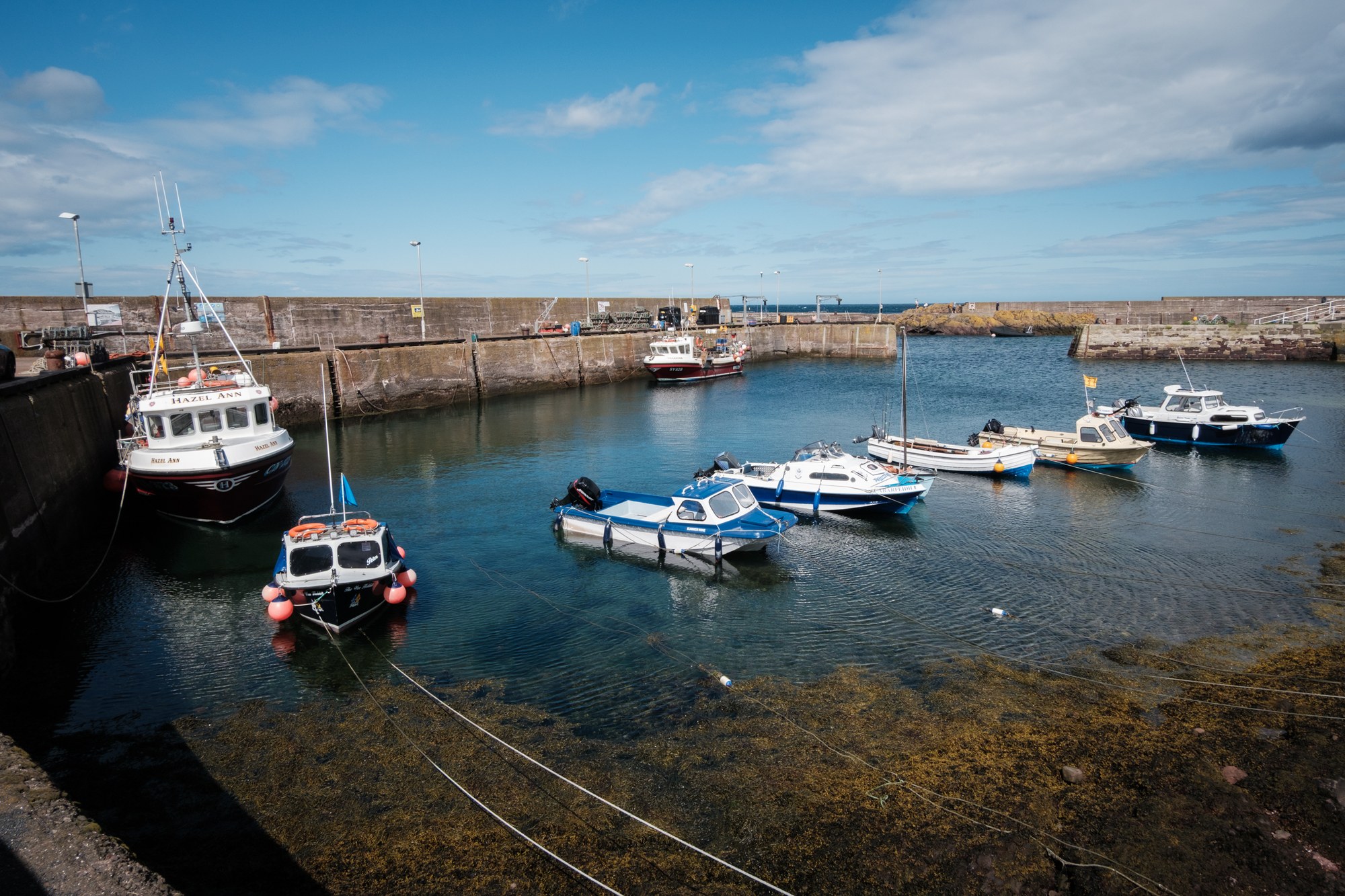
Here are a few sample images from my test drive with the X-M5, down in the working fishing village of St Abbs in the Scottish Borders. I processed the final shots with Fujifilm's Classic Chrome Film Simulation, which gives images a muted, documentary photography look that works beautifully for street and environmental subjects.



Which Camera is Right for You?
Both cameras share the same 26.1MP sensor and the option to use different lenses, so whichever you choose, you'll get the same superb image quality and the benefits of Fujifilm optics.
They also both look fantastic, feel beautiful in the hand, and sit at similar price points (with the X-M5 coming in slightly cheaper). Both models give you access to the same highly sought-after 20 Fujifilm Film Simulations, each with a dedicated Film Simulation dial right on top of the camera. So really, the choice comes down to how you shoot, what you shoot, and what matters most to you.
We also strongly encourage you to think about exactly what you want to shoot, as that will help guide you a lot when choosing a camera.
For example:
Consider the Fujifilm X-T30 III if…
You’re after a digital camera that has the look and feel of an analogue SLR, complete with a viewfinder and the traditional dial set-up on top of the body, and if you’re looking for an incredible all-rounder that performs well for landscape, travel, portraiture and just about any genre you can think of, then this one is for you.
Whatever genres you’re interested in, if you’re a photographer who likes to get creative too, the X-T30 III gives you plenty of room to grow, with full manual control and deeper features to explore as your skills develop. As photographers, we should all be learning, experimenting, and pushing ourselves creatively, and the X-T30 III will help you do exactly that.
Consider the Fujifilm X-M5 if...
A small, light, discreet camera matters most to you. If travel or street photography is your thing, the X-M5 is easy to carry all day and wherever you go, and small enough that you can snap away happily without drawing attention to yourself (a big plus for street photography).
It's also the natural choice if you're more comfortable composing on an LCD screen rather than through a viewfinder, like using your phone, only with far better results. And if social media and video content matter to you, the X-M5 is ideal there too, with footage quality that surpasses anything from a smartphone. In my opinion, if you're looking for the gentlest step up from a smartphone to a camera, keeping similar features but with vastly superior optical and image quality, I would say the Fujifilm X-M5 is the one to go for.
The X-M5 is also the best option if you’re a content creator looking to create superior-quality images and video that will look great on social feeds, no matter what platforms you use.
Final Thoughts: Ready to Take the Plunge with Your First Camera?
I hope this feature has encouraged you to take the plunge and consider investing in your first camera. With the two options discussed above, whichever camera has piqued your interest the most, remember: you're getting the same fantastic image quality in both models, and with either, you’ve got the whole Fujifilm ecosystem of beautiful lenses, filmic aesthetics, and a community to grow into.
When you make that jump from smartphone to camera, I assure you, you won't regret it. You'll discover so many benefits: better images, a new way to improve your craft, and a real reason to take your photography more seriously. But, perhaps more importantly than any of those, it gets you out there taking more pictures, and you’ll enjoy your photography more than ever.
And once you're out there making images you love, remember that your new camera is also a bigger step towards selling them through your own Picfair Store. The better the quality of your images, the more they'll appeal to buyers and the more ways they'll have to use them.
To sum up why Fujifilm is such a great choice for your first camera: the cameras look and feel gorgeous, they're built to last, they produce some of the most beautiful images I've seen from any camera system, and they open you up to so much more, from lenses to community to education.
Want to try any camera models or lenses out first before you buy? You can for free with Fujifilm!
A camera or lens is a big purchase, so Fujifilm also offers a free 48 hour loan so you can try out any kit before you commit to buying it! Find out more on the Fujiilm X Series Loans page.


